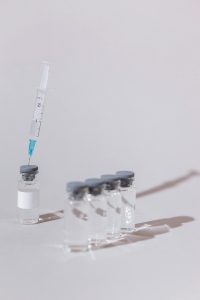
 Vaccination requirements have long been one of the most effective public health tools for preventing serious illness, protecting vulnerable populations, and keeping schools and communities functioning safely. These requirements did not emerge arbitrarily. They were developed in response to devastating outbreaks that overwhelmed communities and claimed lives, particularly amongst children.
Before the measles vaccine became available in 1963, nearly every child in the United States contracted measles, resulting in approximately 48,000 hospitalizations and 400–500 deaths annually. Polio outbreaks paralyzed more than 15,000 Americans each year at their peak. These diseases did not discriminate by zip code, education level, or income. Vaccination requirements were established because voluntary uptake alone proved insufficient to prevent widespread harm.
Recent changes to federal vaccination guidance, coupled with proposed New Jersey legislation that would allow the state to formally set vaccination standards independent of the Centers for Disease Control and Prevention (CDC), have raised understandable questions among Princeton residents. What do these changes mean? Who decides? And what are the real-world implications for families, schools, and community health?
How Vaccination Standards Are Currently Set
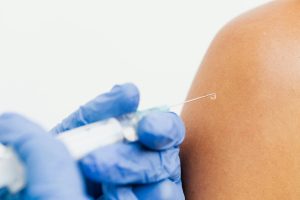 At the national level, the Centers for Disease Control and Prevention (CDC), through its Advisory Committee on Immunization Practices (ACIP), develops evidence-based recommendations for vaccinations across the lifespan. These recommendations are informed by decades of scientific research, disease surveillance, and safety monitoring. While CDC recommendations are not laws, they strongly influence state vaccination requirements, insurance coverage, and clinical practice.
States then determine how those recommendations are incorporated into law. New Jersey has historically aligned closely with CDC guidance and has maintained some of the strongest school immunization requirements in the country. This framework has contributed to high vaccination rates and relatively low rates of vaccine-preventable disease.
What Has Changed at the Federal Level
In early January, changes to the U.S. childhood immunization schedule were announced, reducing the number of routinely recommended childhood vaccines from 17 to 11. Several vaccines, including those protecting against influenza, COVID-19, hepatitis A and B, meningococcal disease, and rotavirus, were shifted into categories such as “shared clinical decision-making” or limited to high-risk groups.
Updates to the immunization schedule are a normal and expected part of public health practice. Science evolves, and recommendations change accordingly. However, these particular changes were made without the usual transparent scientific review process through ACIP, raising concerns among public health professionals.
In response, proposed legislation in New Jersey would allow the state to set its own vaccination standards independent of CDC recommendations. While New Jersey already has authority over its school requirements, this proposal would formalize greater state discretion over the immunization schedule that could either align with, expand upon, or diverge from federal guidance.
Potential Impacts on Public Health
 While vaccination policy begins with individual protection, its true impact is measured at the community level. High vaccination rates help maintain “herd immunity,” which limits the spread of disease and protects people who cannot be vaccinated due to age or medical conditions, such as infants, cancer patients, and individuals with compromised immune systems.
If vaccination standards are weakened, the public health consequences could be significant. Reduced immunization coverage increases the risk of outbreaks of highly contagious diseases, such as measles, whooping cough, and mumps, which spread rapidly in schools and other communal settings. These outbreaks place substantial strain on local health departments, which are responsible for outbreak investigations, contact tracing, issuing school exclusion guidance, and communicating with the community. Responding to outbreaks diverts limited staff and resources away from prevention-focused programs that support long-term community health.
Weakened standards could also disproportionately affect vulnerable populations, including young children, older adults, and individuals with limited access to healthcare. As prevention falters, local health officials could become more reliant on reactive measures such as quarantines and exclusions, particularly among unvaccinated individuals, further disrupting schools, workplaces, and daily life.
An underreported but equally concerning change occurred in December, when the Centers for Medicare and Medicaid Services (CMS) announced that states would no longer be required to report childhood vaccination rates. Approximately 40% of children in the United States are covered by Medicaid, making CMS data one of the most reliable national snapshots of real-world vaccination coverage. Without accurate vaccination data, health departments cannot identify pockets of vulnerability, target outreach, or prevent outbreaks before they occur.
What This Could Mean for Schools and Childcare Settings
Schools and childcare facilities are often where the practical impacts of vaccination policy are felt most directly. If standards become more fragmented or weakened, schools may face increased administrative burdens as requirements grow more complex or subject to frequent change. Managing exemptions and compliance can place school nurses and administrators in difficult positions, particularly when policies lack clarity or consistency. Most concerning, lower vaccination coverage increases the likelihood of outbreaks, leading to student exclusions, classroom quarantines, or temporary school closures that disrupt in-person learning.
The New Jersey Department of Health emphasizes how high vaccination coverage is essential to keeping schools open and hospitals functioning. Any shift away from evidence-based standards risks reversing decades of progress. For families, changes to vaccination requirements can create confusion, particularly for those moving between states or enrolling children in multiple educational settings. Consistency and clarity are essential for both public health and educational continuity.
Considerations for Princeton Residents
Princeton residents are often deeply engaged in public policy, education, and health issues, and vaccination policy is no exception. Regardless of where one stands on legislative approaches, it is important to recognize that vaccines remain one of the safest and most rigorously monitored medical interventions available. The Princeton Health Department works closely with schools, healthcare providers, Mercer County, and the New Jersey Department of Health to monitor disease trends and respond quickly when concerns arise. Strong vaccination coverage allows us to focus resources on prevention, education, and broader health initiatives rather than crisis response.
We remain committed to following evidence-based immunization guidance, supporting Princeton families with clear, accurate information, and ensuring vaccine access to protect our most vulnerable residents.
Moving Forward
 Public health is often invisible when it succeeds. When children are protected from measles, when newborns never develop hepatitis B, and when whooping cough does not sweep through a school, most of us do not notice what didn’t happen. Vaccines are among the clearest examples of public health’s quiet success, making them particularly vulnerable when trust erodes.
Vaccines remain safe, effective, and widely supported by pediatricians, epidemiologists, and public health professionals. Parents with questions should seek information from trusted healthcare providers and reputable sources such as the New Jersey Department of Health, the American Academy of Pediatrics, and local health departments.
As legislation is discussed at the state level, the Princeton Health Department will continue to monitor developments closely and provide accurate, timely information to residents. We encourage residents to stay informed, engage respectfully, and seek information from trusted medical and public health sources. As a local health department, our role is not political. Our responsibility is to protect health, prevent disease, and support informed decision-making for the Princeton community.
 Elizabeth Dyevich, BSN, MS, CSN, “Nurse Liz” has been a registered nurse for 41 years, with extensive experience in both hospital and school health settings. She spent the early part of her career in hospitals across Philadelphia and New Jersey. For the past 17 years she has been caring for students and families as a school nurse in the Princeton Public School district. The last 4 years she has been a member of the Princeton Board of Health, serving as its chair for the past two.
 Jeffrey C. Grosser, MHS, HO, CPM currently serves as the Director of Health, overseeing the Health Department and Bureau of Rental Inspection for the Municipality of Princeton. As Director, Mr. Grosser is responsible for the administration of public health practice standards in Princeton. Under his leadership, the health department became only the third local health department in New Jersey (and one of the smallest in the country) to achieve national public health accreditation in November 2018 through the Public Health Accreditation Board (PHAB). Prior to his time in Princeton, Mr. Grosser worked for the Burlington County Health Department. He began his public health career as an Environmental Health Specialist and finished his time there as Program Manager of Disease Prevention and Control, overseeing Communicable Disease, Mosquito Control and the Animal Shelter. Beyond governmental public health, Mr. Grosser has served as an adjunct faculty member at Stockton University’s School of Health Sciences since 2013.