
 Artificial intelligence (AI) is reshaping our world, and when it comes to cancer, it is helping to save lives.
At Penn Medicine Princeton Health, healthcare providers are using AI, along with advanced imaging and other technologies, to assist in detecting certain cancers earlier when they’re easier to treat.
Moreover, AI is helping to ensure patients receive the care they need quickly and don’t fall through the cracks.
Identifying Early-Stage Lung Cancer
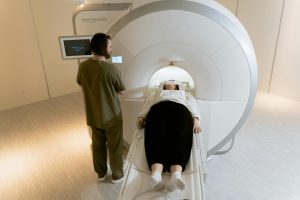 Incidental pulmonary nodules are frequently discovered during CT scans conducted for unrelated medical reasons, often during a visit to the Emergency Department. Though most nodules are benign, some may indicate early-stage lung cancer.
To ensure patients receive appropriate follow-up care after being treated in the Emergency Department, clinicians use AI to flag all incidental nodules of a certain size. Then, if necessary, the scans are reviewed by the Princeton Health Lung Nodule Board to determine whether additional testing and care is necessary.
The multidisciplinary Lung Nodule Board is composed of board-certified pulmonologists, radiologists, thoracic surgeons, oncologists, and nurse navigators who specialize in the diagnosis and treatment of lung cancer.
Though lung cancer remains the leading cause of all cancer deaths among men and women in the United States, early detection with AI assistance at Princeton Health is helping to save lives.
Each month, approximately 20 patients who seek care in the Princeton Health Emergency Department for an unrelated condition are found to have lung nodules. While the majority are not problematic, an estimated 25 percent are referred to the Lung Nodule Board for review.
A New Era for Screening Colonoscopy
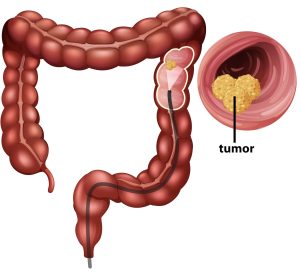 Artificial intelligence has also ushered in a new era for screening colonoscopy.
At Princeton Health, doctors are using AI-assisted technology to help detect hard-to-find precancerous polyps and prevent cancer before it starts.
Most colorectal cancers start out as polyps or growths on the inner lining of the colon or rectum. They don’t usually cause symptoms, but some can change into cancer over time.
That’s why early detection through colonoscopy is key. When polyps are caught early, they can be removed before they turn cancerous.
With AI-assisted colonoscopy, the AI system uses algorithms to highlight potential polyps, particularly small or flat polyps that might otherwise go undetected.
While AI-assisted colonoscopy is state-of-the-art technology, it does not replace the skill and judgement of a well-trained clinician. The tool is designed to aid medical professionals and support their decision-making.
Supporting Timely Access to Care
 When a new cancer is detected, whether it’s lung, colon, or any other type, Princeton Health uses AI to alert a nurse navigator right away.
This enables the nurse navigator to begin coordinating care sooner. As a result, patients are often able to begin treatment sooner, which can improve survival rates and reduce the risk of recurrence.
Moreover, starting treatment promptly can help reduce the anxiety and uncertainty that comes with waiting and can reduce symptoms more quickly, enabling patients to maintain a better day-to-day quality of life.
Next Gen Medical Imaging
Alongside AI, advancements in medical imaging are helping with early detection, diagnosis and treatment of cancer, as well as other diseases. It also assists in recovery and long-term management.
Penn Medicine has long been on the forefront of medical imaging. In fact, a Penn physicist teamed with Penn surgeons to produce some of the first X-rays of patients. Penn’s Radiology division, which opened in 1897, was believed to be the first in the U.S.
As imaging technology evolved, the clarity and detail of images have increased dramatically while scan times have decreased, and radiation exposure has been reduced.
Today, this combination of accuracy, speed and safety is improving outcomes in many areas of medicine, including oncology, cardiology, neurology, orthopedics and emergency medicine.
Princeton Health, which recently broke ground on the Penn Medicine Princeton Cancer Center, continues to invest in advanced imaging technology.
Next generation CT, MRI, and PET/CT machines coming this summer will offer patients access to leading-edge medical imaging close to home. Because of their speed and accuracy, the new machines will help cut wait times for scheduling and reduce appointment times while enhancing precision diagnostics.
The machines are also designed to be more comfortable and quieter, making the experience less stressful, particularly for people who experience anxiety in medical settings.
And as imaging becomes even more sophisticated, it will allow for greater customization of therapies based on the specific characteristics of each patient and their condition.
Redefining Care
 Advancements in AI and imaging technologies at Princeton Health are enhancing early detection and streamlining care.
With the new Penn Medicine Princeton Cancer Center underway and ongoing investments in state-of-the-art equipment, Princeton Health is redefining cancer care in Central New Jersey and leading the way in delivering innovative, compassionate, high-quality care close to home.
Kerri Celaya, MA, FACHE, is Director of Cancer Services at Penn Medicine Princeton Medical Center. Jason Colloton, MSM, RT (N), CNMT is Director of Radiology at Penn Medicine Princeton Health.
 Kerri Celaya, MA, FACHE, is Director of Cancer Services at Penn Medicine Princeton Medical Center. In this role she oversees strategic, operational, and fiscal leadership for Outpatient Infusion, Radiation Therapy, Clinical Research, and the broader Cancer Program. She leads service-line planning, accreditation readiness, performance improvement, and initiatives that enhance access, quality, and patient experience.
 Jason Colloton, MSM, RT (N), CNMT is Director of Radiology at Penn Medicine Princeton Health and Penn Medicine Doylestown Health.