
 New Jersey’s electricity rates are amongst the highest across the continental United States. In fact, residential prices rose more than 33% from June 2023 through June 2025. Last summer, customers saw prices spike sharply, and aside from some temporary account credits, few changes were made to help consumers ease this burden quickly. On inauguration day, January 20, 2026, New Jersey Governor Mikie Sherrill fulfilled a campaign promise when she enacted her first two Executive Orders, aimed at curbing the cost of electricity in the Garden State.
Sherrill’s first Executive Order requires the New Jersey Board of Public Utilities (BPU) to provide more universal bill credits. The governor also empowered BPU to pause or modify actions that could increase bills further, and to conduct a study on modernizing the electric distribution business. In her 2nd Executive Order, she declared a State of Emergency, established a Nuclear Power Task Force, and urged permit reform. She also created and expedited programs to expand development of new power generation.
Will these Executive Orders lead to changes that benefit locals?
HISTORY OF UTILITY PRICING IN NJ
 You may recall, last summer utility pricing (mainly electricity) sharply increased. This was due to the escalation of the supply portion of residential bills. The cause is a bit complicated, but simply put, expectations for high future electricity demands drove up the pricing (mostly due to increased Artificial Intelligence use and advances). The regional grid operator for New Jersey, PJM Interconnection, held its capacity auction that locked in wholesale supply costs. Those costs skyrocketed due to this expected increase in demand and a lacking supply infrastructure to meet it. The wholesale costs are passed on to the consumer.
To help offset the spikes, which were increasingly troublesome during summer months with peak air conditioning usage, BPU, with legislative cooperation, approved a $100 residential credit. This resulted in two $50 credits on utility bills provided during the fall months last year.
The NJ Legislature also sought to assist, with the introduction of multiple bills aimed at improving affordability down the road. Many urge BPU to act, including conducting studies of alternative grid operators, alternative reactors and gathering information on data center’s electricity rates. There were also bills put forth to use alternate energy for proposed artificial intelligence data centers, to expand solar and storage programs or to redirect profits and fines to offset costs. Some of the bills were passed and signed into law, mostly those to increase transparency and conduct more studies.
None of the actions immediately offer long-term pricing easement for consumers. They may eventually, but today locals are still feeling the burden.
THE IMPACT OF HIGHER UTILITY PRICES
Princeton Perspectives asked our readers to share how they have been affected by higher utility costs. Though most have been able to manage, it has made them much more aware of their actions and caused some to make changes.
85% of respondents shared they have certainly noticed the increase. Some stated their bills have been up by as much as 20-25%. With many families already working to become more energy conscious (such as switching to LED lights and turning off lights in unoccupied rooms) it has been difficult for many to further curb electricity use.
 “I’ve become very obnoxious around the house regarding utility use,” one reader shared. “Feeling cold? Put on a sweater. Still cold? Put on another sweater! Likewise in summer, we were more diligent about raising the AC temp on the second floor of our home (where the bedrooms are) during the day and reversing that at night when we don’t need cooling downstairs.”
While keeping costs down is normally up to the adults, it seems the increase in utility bills has become more of a family affair, with children also working to find alternate ways to cut back usage and save money.
CAN EXECUTIVE ORDERS LEAD TO CHANGE
Supporters of Gov. Sherrill’s Day 1 actions, putting a hold on increases and requiring credits to offset any 2026 planned increases, say it will provide some relief. Additionally, there is praise for Sherill’s moves to study and accelerate other forms of electricity options to help ease the burdens on traditional electrical grids, noting these could also lead to improvement. Does this go far enough?
Opponents say credits are great, but when will they come? They further add that the root of the pricing problems cannot be solved in this way, and any change that will come from the Executive Orders will take too much time.
The governor alone cannot have a huge impact on utility pricing. NJ is only one of 13 states (plus the District of Columbia) that are part of PJM, so it alone can’t make all the change necessary. The auction prices are the prices, regardless of what legislation is passed statewide. NJ utility companies like PSE&G mostly pass along the supply pricing to their customers, they do not profit from it. So, while BPU can review the pricing, it has little say about what it is. That being said, reforms can be enacted, urged by NJ and other states, that could allow for change over time. Additionally Federal Energy Regulatory Commission (FERC) could revise rules that could impact the pricing as well.
Rate freezes do not lower rates, and credits are only temporary. Princeton Perspectives’ readers agree the governor’s Executive Orders are an effort, yet 80% feel they will not lead to meaningful change.
“The cost should be brought down by increasing energy production, bringing nuclear energy back onboard, stopping expensive and environmentally degrading windmills and decreasing energy costs, not holding them at current high rates. Why would you want to freeze costs at a high rate instead of lowering them?” shared one respondent.
“Credits? Coming from where? To whom and how much? ‘Far enough?’ This political word salad is the equivalent of ‘we’re working on it’ and kicking the can down the road.,” said another.
While some noted it would be better for consumers if the administration legislated a rollback rather than a freeze, the government cannot dictate such pricing. There were also mentions that Trump’s cancellation of offshore windmill projects, and the long lead time needed to develop other forms of energy will not allow change to come fast enough.
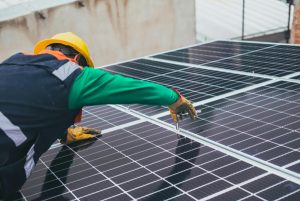 Some readers shared they are excited to add solar energy to their home. It was also suggested more incentives for energy upgrades (such as buying electric cars or adding home insulation) could provide quick benefits now. NJ could also look to what other states are doing.
“We have a home in Northeast Pennsylvania and the state has a website that simplifies energy provider selection. The PA site allows me to select rate terms (6 months / 1 year / etc.), green vs. not green energy suppliers, and a few other parameters. I think this would be very useful in NJ,” a respondent added.
CHANGES LOCALS WANT TO SEE
There have been a lot of possibilities laid out through the Executive Orders and the proposed and adopted legislation. What options appeal to locals the most? What else would they like to see done?
Everything from reducing the salaries of energy executives to making data centers pay more has been suggested. But the government has little to no control over such structures. Where it could have an impact is with incentive rebates and making alternate energy sources more available.
“Bring back the tax credits to households for upgrading to solar energy. Of course this is a federal program, not state,” a reader recommends. “But this would be what would allow residents to continue to be proactive about reducing use of electricity from the grid, have the opportunity to sell the extra electricity harvested via solar panels back to the grid and help bring prices down.”
“Provide more robust state-regulated utility options for much more use of higher-efficiency home heating, cooling, and other energy use systems. The highest efficiency systems will, over their depreciable lifetime, result in a meaningful reduction in energy use and thus cost,” another reader suggests.
Beyond the types of energy available and used, there is also a hope that the root of the problem be discovered and solved for.
“A concern that is big or bigger is whether there will be enough power being reliably delivered in the future…and the governor would be well advised to take an unblinking, impartial look at exactly why power costs are going up.”
EFFORTS TO HELP
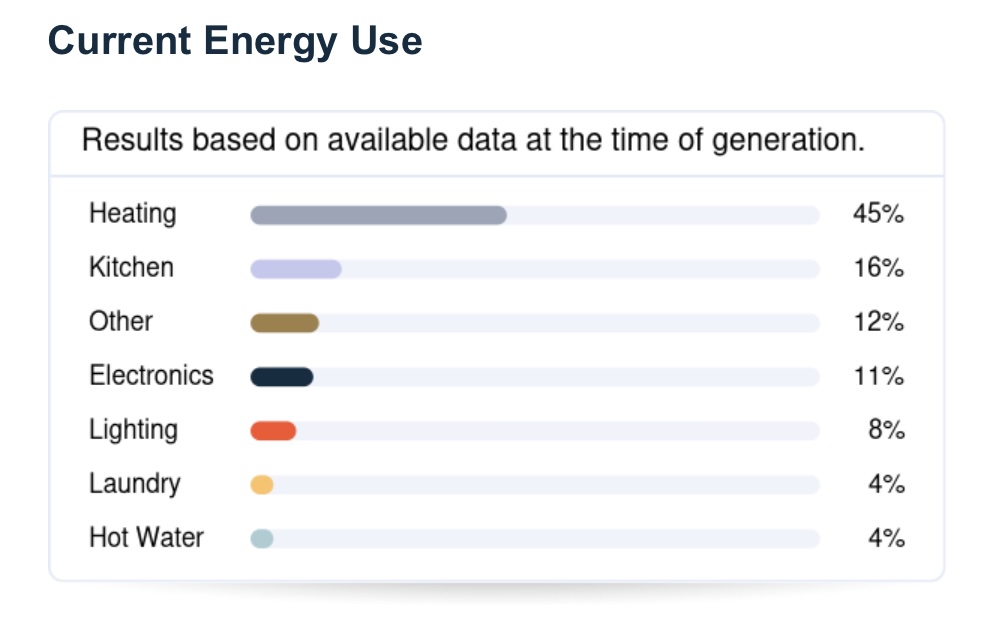 The Princeton-area’s energy company, PSE&G, controls the costs for delivery but can’t control the cost of supply – it just passes that on. But it has taken some efforts to help inform customers of their usage, which can make small inroads to reducing charges. A personalized monthly “MyEnergy” letter/email details your overall spend for the previous month and shares small changes that could be made. The messaging compares your usage to other homes nearby, of similar square footage, age and electrical abilities. In doing so, it helps determine where your energy is being used most (on heating, in the kitchen, doing laundry, etc.), so you can cut back if you are able and desire to do so. Additionally, it charts your electrical usage over time, from month to month, so you can see where you peak.
If and until big changes happen to curb the price of electricity, there are some little things that could be done to impact your costs. PSE&G frequently offers tips, such as suggesting a household could, “use the sun’s free heat by opening the window coverings on your sunny windows during the day, and then reduce heat loss by closing curtains and shades at night.”
Are you willing to try it?
NEW LANDSCAPE FOR UTILITY PRICING
 Whether you make any major household changes or not, the good news is that electricity supply rates will not go up this year, in fact they will go down slightly. On February 12, 2026, BPU certified NJ’s 25th annual electricity auction for Basic Generation Service (BGS), which re-prices one-third of the supply each year. This is the default electricity supply for most New Jerseyans (unless you have chosen a 3rd party supplier). The new pricing goes into effect on June 1st and this year a residential customer using 650 kwh per month will experience a monthly bill decrease of $3.23. It is not a huge amount but constitutes $38.76 savings for the coming year term. Additionally, customers will be seeing billing credits as required by Sherrill’s Executive Order. Now that pricing has been certified, the BPU board will next vote on what credit amounts will be issued and when. The Executive Order requires at least an initial set of credits must be issued by July 1, 2026.

Lisa Jacknow spent years working in national and local news in and around New York City before moving to Princeton. Working as both a TV producer and news reporter, Lisa came to this area to focus on the local news of Mercer County at WZBN-TV. In recent years, she got immersed in the Princeton community by serving leadership roles at local schools in addition to volunteering for other local non-profits. In her free time, Lisa loves to spend time with her family, play tennis, sing and play the piano. A graduate of the S. I. Newhouse School of Public Communications at Syracuse University, Lisa was raised just north of Boston, Massachusetts but has lived in the tri-state area since college. She is excited to be Editor and head writer for Princeton Perspectives!