
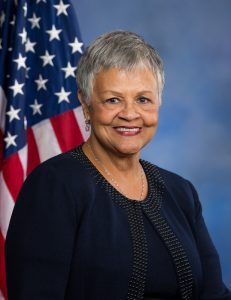
As a young legislative staffer in Trenton in the 90s, we knew which legislators would and would not give you the time of day. Bonnie Watson Coleman was in a class of her own. Always warm and engaging, she took the time to know you. In a world where you were taught to never stand in the space between two legislators, Bonnie wanted you to feel completely comfortable approaching her. Years later, by the time Facebook became a thing and she was a national figure, she took the time not only to wish you a happy birthday— impressive enough from a sitting member of Congress—but to comment on photos of your family. The thing is it was never a surprise coming from Bonnie. That’s just Bonnie.
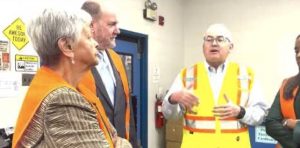
When she retires at the end of 2026 after a career in public service spanning more than 50 years, Mercer County will have a new representative in the United States House of Representatives, but it is unlikely we will ever see another lawmaker like Bonnie Watson Coleman. Almost from the moment her family settled here in the 1960s, Mercer County has been represented by a member of the Watson family– first on the freeholder board; then in the Assembly, and now in Congress. I can only think of one other father-daughter legislative duo in New Jersey history– the Littells of Sussex County.
Along with the rest of Lawrenceville, Rider University’s campus was part of Bonnie’s 12th Congressional District before the new map was drawn in 2021, and then it moved into the 3rd Congressional District, represented first by Andy Kim and now by Herb Conaway. This region has been uniquely blessed with strong House members. The thing is, whenever a Rider student asked to intern for Bonnie, she never let district boundary lines get in the way. Maybe the most lasting contribution of Bonnie Watson Coleman’s lifetime of public service will be how many of our best leaders got their start on her staff. Of course, there’s James Gee and Kari Osmond, whose stellar careers are both well known in New Jersey politics, but there are also the former students who started their own careers with Bonnie and who now serve in elected office in their own right, or who always dreamed of being able to help immigrant families like their own, and have gotten the chance to realize it through their work with Bonnie.
It is fitting that one of Bonnie’s last legislative acts will be to turn her seat over to one of the scores of New Jersey’s next generation of leaders who are lining up to succeed her. Two of Bonnie’s longtime colleagues and friends in the New Jersey delegation have died in office within the last year and a half—Bill Pascrell and Donald Payne. Perhaps with an eye toward the conclusions of their careers, which were not of their own choosing, Bonnie decided for herself when it was time to pass the torch.
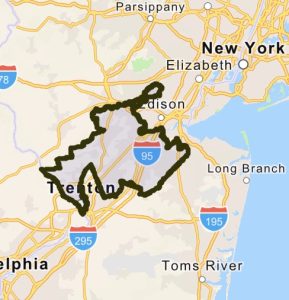
In recent elections, the 12th District has voted for Democratic candidates more than Republican candidates by 13 points more than the rest of the nation. Indeed, 1999 was the last time the district was represented by a Republican, and that was with a much more favorable map. Combined with a mid-term election cycle in which Republicans will be on defense of every White House decision, 2026 is shaping up to be a difficult year for the GOP to try and reclaim the seat, even as a year with an open seat is always going to be the best time to make a move.
As a result, interest to succeed Bonnie among the next generation of Democratic leaders throughout the district has been particularly strong. Tennille McCoy and Verlina Reynolds-Jackson, both of whom currently represent Mercer County in the state legislature, are running in the June primary election to become the Democratic nominee. Obviously, they would be closely following the path of the first black woman from New Jersey to serve in Congress.
Also in the race are Somerset County Commissioner Shanel Robinson, Plainfield Mayor Adrian Mapp, East Brunswick Mayor Brad Cohen, former U.S. Department of Energy official Jay Vaingankar, Millstone Mayor Raymond Heck, former West Windsor mayoral candidate Sujit Singh, Trenton entrepreneur Elijah Dixon, and gym owner Kyle Little.
In such a crowded primary—without New Jersey’s longtime county organization line giving endorsed candidates favorable ballot position—the number of votes needed to win drops dramatically, and with the smaller turnout of a primary election, anything can happen. In these races, established name recognition is critical, as well as the ability to quickly organize and raise money to effectively communicate your message. Mercer County’s Reynolds-Jackson and Tennille McCoy could both be well positioned. One factor that they might need to consider, though, is splitting Mercer’s primary vote, especially if another county within the district—Middlesex—has only one candidate in the race—Cohen.
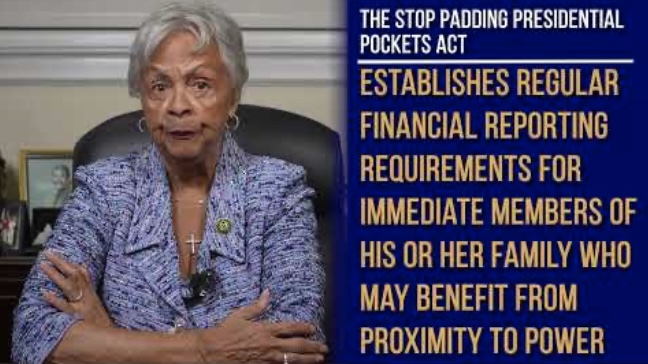
No matter who gets over the finish line in June, what will be impossible to ever forget about Bonnie Watson Coleman’s years of public life is how utterly unafraid she has been to stand up to President Trump whenever she felt his policies were hurting the people she represents. This lasting example she has set will be another crucial part of her legacy, because she has taught us that sometimes the timid approach doesn’t cut it, and we all need to find our inner Bonnie.
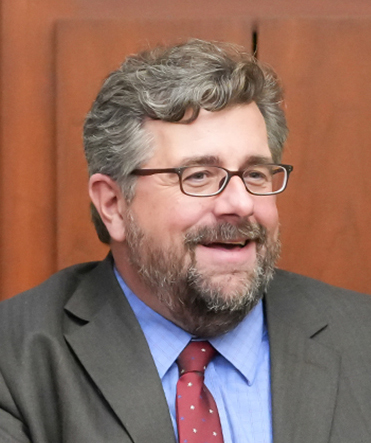
Micah Rasmussen runs the Rebovich Institute for New Jersey Politics at Rider University, where he teaches courses on political campaigns and New Jersey government and politics. He worked as a press staffer in the New Jersey General Assembly when Watson Coleman was first elected to that body.