
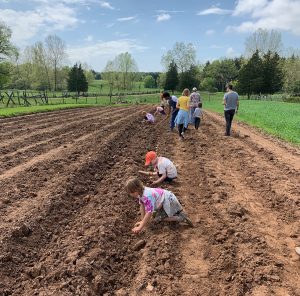
 Mercer County has made it a priority to preserve farmland. To date, more than 8,900 acres have been preserved countywide. There’s over 30,000 more acres preserved as park/conservation land. Included in these counts are Terhune Orchards and Howell Living History Farm. Two very different ventures, both run for years by Peace Corp veterans who wanted to care for the land, and ensure it is passed along from generation to generation.
HOWELL LIVING HISTORY FARM
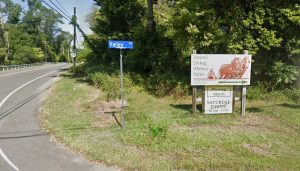 A facility of the Mercer County Parks Commission since 1974, Howell Living History Farm has been a working farm for over 285 years. The Howells were the last family to own it (though it was mostly farmed by tenants), and the family’s daughter later donated it to the county with the hope that people could continue to experience life on a local farm for years to come.
Her vision came true and prospered, as the area has grown from the 126-acre tract she donated into a 273-acre historical park today (part of the Pleasant Valley Historical Park). The latest 6 acres were just purchased in February, enabling the farm to expand on Valley Road to include an historical sawmill and production of sustainably harvested wood materials.
It opened to the public as Howell Living History Farm in 1984 and welcomes over 65,000 visitors annually. Peter Watson started farming the land in the 1970s after leaving the Peace Corp. He became its first Director and now works there together with his son Kevin, fulfilling the vision Inez Howell spelled out in her donation letter to the county.
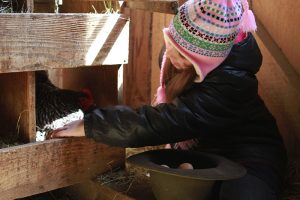 “She cited things like remembering what it was like to reach under a hen and get a warm egg, helping her father shear a sheep or walking through the meadow with the sun across the Delaware. Remembering the smell of mint as she was helping cows get to the barn,” Peter Watson recalls. “She realized New Jersey’s rural and agricultural landscape was changing (in the mid-1970s) and she wanted their farm to become part of the experience people living now and, in the future, could enjoy and take from the way she had as a child.”
Peter and Kevin did not have livestock in their backyard, but they did share in activities like ice harvesting and maple sugaring through the years. So, it was a natural transition to run this farm and enable families today to engage and experience farm life the way it used to be.
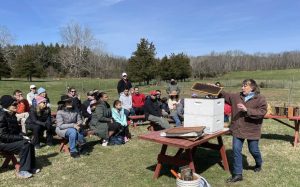 “We often see parents and children, or parents and their parents and their children, come together to visit the place. While they’re seeing the same things and having opportunities to watch and participate, I’m sure many older folks are reminiscing or thinking about changes that have occurred in their lifetimes. The younger people are thrilled at the environment they find themselves in with farm animals and beautiful streams you can cross on stepping-stones,” Watson explains. “People share together their experience at the farm, and that’s a really wonderful thing to have preserved.”
Whether it is international students and agricultural professionals coming by to learn about the yoke and harness designs preserved at Howell to bring back to their farms, or elementary-aged school children using tools in the circa-1900s kitchen to create a recipe that has evolved through generations, visitors appreciate the hands-on learning, and enjoy connecting how things were done then vs. how they are today.
TERHUNE ORCHARDS
Before it became a public park, Peter worked the land at Howell Farm alongside his fellow Peace Corp volunteer, Gary Mount. It was actually Mount who encouraged Watson to apply for the job of Director. Mount then forged his own path, as he and wife Pam were looking for a place they could work together, build a community and have a farm opportunity for their children then and in the future.
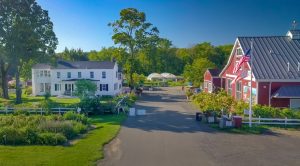 For three generations the Terhune family farmed their land, open to the public for three months each year to sell cider, apples, peaches and pears. Their 55-acre farm was purchased by the Mounts in 1975, which they’ve since turned into a 250-acre operation with over 60 crop varieties, a winery, farm store and that community center they’d always hoped for.
“While we’ve expanded more offerings and programming and experiences and crops, we have the same core values we had 50 yrs ago, and those are the same core values and vision we will carry forward. We hope people keep coming for that experience and for enjoying the wonderfulness we feel our family farm is,” shares Tannwen Mount, who now helps her mother run the farm, along with her sister Reuwai Mount-Hanewald. Pam’s niece, Kirsten, also came back to be part of the Terhune team.
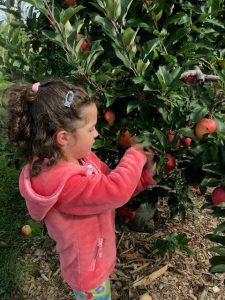 In the fall, their Van Kirk Road apple orchard is bustling with apple picking and the Cold Soil Road farm is filled with pumpkins and hayrides. Adults can read and explore with their little ones mid-week mornings and come back as a family to pick fresh fruit seasonally on the weekends. There is often live music, food for sale and the community takes advantage of this destination.
While Tannwen, Reuwai and their brother loved growing up on the farm, they opted go out and forge their own paths as young adults. In her late 20s, Tannwen opted to return from the west coast, be an active auntie to Reuwai’s first child, and help grow the family business. She played a key role in helping them buy the adjacent property where they planted their first grape vines and later transitioned into organic production. The winery is a popular site for activity, with events filling the calendar throughout the year.
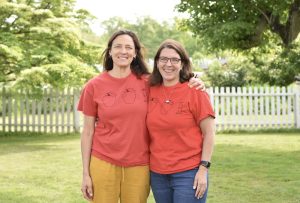 Reuwai’s children are all in college, and Tannwen’s are still locally in school, but they all know it is a place they can call home.
“The farm is really important to all of our kids. That’s something we keep in mind daily that was important for us growing up, and is important for the next generation, maintaining the ability and openness for future generations as well,” Tannwen shares. “I live on the property, my sister lives right across the street.”
Gary passed away in late December, following a battle with glioblastoma brain cancer. His loss is felt, but with most of his family living at Terhune or nearby, it seems he achieved the family farm he’d always dreamed of. Not just for himself, but for families across the area.
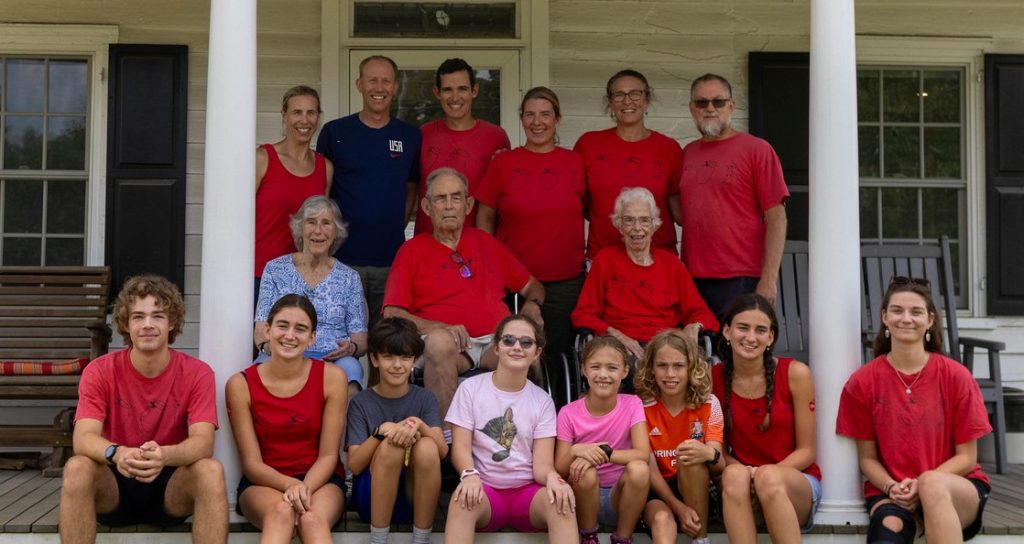 “I think he would hope they think of the Mount family and Terhune Orchards as a community center. A place where everyone is welcome,” Tannwen states. “We’re always open, we never close. Everyone can come and enjoy the open space and community center we have fostered as a family.”
CONTINUING FOR GENERATIONS
While it is unknown where the Mount grandchildren will end up, they know Terhune is always there for them. And families young and old continue to come by, whether for the fresh cider and doughnuts or to experience the farm.
Similarly, Howell Living History Farm hopes that its farm, with relics of the past, will continue to be a learning, gathering and engaging opportunity.
There may be fewer farms today than there were in the past, but the caretakers are working hard to ensure they remain, for the families of today and well into the future.
Lisa Jacknow spent years working in national and local news in and around New York City before moving to Princeton. Working as both a TV producer and news reporter, Lisa came to this area to focus on the local news of Mercer County at WZBN-TV. In recent years, she got immersed in the Princeton community by serving leadership roles at local schools in addition to volunteering for other local non-profits. In her free time, Lisa loves to spend time with her family, play tennis, sing and play the piano. A graduate of the S. I. Newhouse School of Public Communications at Syracuse University, Lisa was raised just north of Boston, Massachusetts but has lived in the tri-state area since college. She is excited to be Editor and head writer for Princeton Perspectives!