

As Princeton Police and state cybersecurity officials have logged their crime reports, the pattern has been hard to miss: fake bank employees luring you into parking lots to hand over cash, scam texts and QR codes disguised as court notices and toll violations, and fraudulent schemes all aimed at stripping you of your money and personal information.
Behind those brief police summaries are real people who picked up a call, answered a text, or followed instructions that felt urgent and legitimate in the moment.
In my four decades of investigative work, the tools of the trade have changed, but the predator’s mindset remains the same: find the path of least resistance to the greatest reward. For today’s global syndicates, that path often leads straight to the front doors and digital inboxes of Princeton, New Jersey.
The “Affluence Trap” and High-Education Vulnerability
 It is a common misconception that scams only target the “less savvy.” According to a joint study by Experian and the U.S. Department of Justice, affluent Americans are 43% more likely to experience identity theft than the general population. Princeton’s unique makeup, a dense concentration of high-liquid assets and residents with prestigious titles, makes it what investigators call a “High-Value Target.”
Scammers use “Whaling” or “Spear Phishing” to target senior executives, academics, and wealthy families. They aren’t just sending random emails; they are crafting messages based on publicly available details about your professional life, your family’s social media, and your business affiliations. Ironically, a high level of education can sometimes create overconfidence, leading individuals to believe they are too smart to be fooled, which scammers exploit through sophisticated psychological manipulation.
Common Scams Targeting Our Area
Whaling & Executive Phishing: Scammers impersonate trusted advisors, private bankers, or even family members to authorize urgent wire transfers.
Investment & Crypto Fraud: Leveraging Princeton’s interest in high-yield opportunities, criminals use AI-generated content and fake “exclusive” portals to sell non-existent luxury assets or “guaranteed” crypto returns. According to the FBI’s 2024 Internet Crime Report, investment fraud accounted for $6.5 billion in losses last year, much of it driven by cryptocurrency schemes.
 Tax & Authority Impersonation: Residents frequently receive calls from “IRS agents” or “government officials” claiming immediate payment is required to avoid arrest. The FTC reported that government impersonation scam losses hit $789 million in 2024 alone, up $171 million from the year before.
Romance Scams & “Pig Butchering”: This is one of the fastest-growing fraud categories in the country, and it targets affluent, educated individuals with particular effectiveness. Criminals build emotional relationships online over weeks or months, then steer victims into fake cryptocurrency investment platforms. The FBI’s IC3 documented $5.8 billion in losses from these schemes in 2024. The victims are not naive; they are smart people who were systematically manipulated by professionals.
AI Voice Cloning (“Deepfake” Calls): Using as little as a few seconds of audio scraped from a social media video, criminals can now clone the voice of a family member and call you with a fabricated emergency. In a widely reported Florida case, a mother sent $15,000 after receiving a call from what sounded exactly like her daughter crying for help. Her daughter was home safe. The FBI and CISA have reported a sharp rise in these attacks, and industry data shows deepfake voice fraud incidents surged over 400% in 2025.
QR Code Scams (“Quishing”): Fraudulent QR codes are showing up on parking meters, restaurant menus, HOA mailers, and even fake municipal notices. When scanned, they redirect to credential-harvesting sites that look identical to your bank or utility provider. This is a fast-growing category in suburban and affluent areas where residents are accustomed to scanning codes without thinking twice.
Impersonation of Trusted Local Contacts: Homeowners and families are increasingly targeted by emails that appear to come from a contractor, a realtor, an HOA board member, or a school administrator, urging them to click a link or wire funds for a time-sensitive matter. The request looks routine, which is exactly what makes it dangerous.
Where Does the Money Go?
One of the most sobering questions I’m asked is: “Where does my money actually go?” It doesn’t just disappear; it fuels a global fraud economy that is increasingly intertwined with organized crime.
Proceeds from cyber-enabled fraud are frequently laundered through complex international networks. According to the FBI’s 2024 Internet Crime Report, Americans lost a record $16.6 billion to internet crime last year, a 33% increase over the prior year. That money moves quickly through cryptocurrency wallets, shell companies, and international wire transfers into the hands of transnational criminal organizations.
INTERPOL and the U.S. Treasury’s Financial Crimes Enforcement Network (FinCEN) have both warned that fraud proceeds feed a sprawling criminal ecosystem, ranging from organized crime syndicates to, in documented cases, groups linked to terrorism financing. Identity theft and credit card fraud, in particular, allow these networks to move money across borders while bypassing standard cash reporting requirements.
The bottom line is this: when a Princeton resident loses $50,000 to an investment scam, that money does not sit in someone’s checking account. It enters a pipeline that funds further criminal activity on a global scale.
Am I at Risk?
I get this question constantly from Princeton residents, and the honest answer is yes. Not because Princeton is uniquely dangerous, but because it is uniquely attractive to the people who do this for a living. This is a community with a global reputation, a high concentration of wealth, and residents whose names, titles, and affiliations are often a quick internet search away. That combination is exactly what modern scam operations are built to exploit.
The risk is not theoretical. New Jersey consistently ranks among the top states for fraud and identity theft complaints filed with the FTC. Mercer County residents are targeted by the same international syndicates that hit Manhattan, Greenwich, and Palm Beach. The difference is that many Princeton families have never had a reason to think about personal security the way a CEO in midtown does, and that gap in awareness is itself a vulnerability.
You do not need to live in fear. But you do need to understand that the same things that make this community exceptional, its wealth, its prestige, its global connections, also make it visible. And visible is all a scammer needs to get started.
How to Protect Your Family and Business
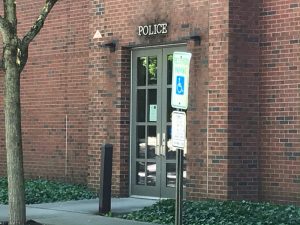 Protection in the digital age requires the same vigilance we used to apply to physical locks and alarms. The difference is that today’s threats are invisible. There is no broken window, no kicked-in door. Someone halfway around the world can drain your accounts, open credit lines in your name, or impersonate your spouse on a phone call, and you may not know it happened until the damage is done. The good news is that most of these attacks can be stopped or significantly slowed with a handful of steps that cost little or nothing. Here is where I tell every client to start:
Freeze Your Credit: If a scammer gets your Social Security number, the first thing they will do is try to open new accounts in your name. A credit freeze with all three bureaus, Equifax, Experian, and TransUnion, stops that cold. It is free, it takes minutes, and it is the single most effective step you can take to prevent someone from borrowing against your identity. Most people still have not done this.
Prioritize Email & Device Security: Standard antivirus software is no longer sufficient protection against modern attack methods. Use multi-factor authentication (MFA) on every account, especially email, banking, and any financial platform.
Verify via Secondary Channels: If you receive an urgent request for money from a “trusted” source, whether it comes as an email, a text, or a phone call that sounds like your son or daughter, hang up and call them back on a known number. Never use the contact info provided in the suspicious message.
Establish a Family Code Word: Pick a word or phrase that only your immediate family knows. If someone calls claiming to be a family member in an emergency, ask for the code word before you do anything else. This one simple step defeats most AI voice cloning scams.
Data Broker Removal: Proactively remove your personal information from data broker websites to prevent scammers from building a profile on you. Sites like Whitepages, Spokeo, and dozens of others sell your name, address, phone number, and family connections to anyone willing to pay.
Educate Staff and Family: Scammers often target “softer” targets, like administrative staff or younger family members, to gain entry into a larger estate or business network. Have the conversation at home and in the office. If someone on your team or in your family doesn’t know what “pig butchering” means, they’re more vulnerable than they need to be.
Monitor Your Accounts Weekly: Don’t wait for your monthly statement. Check bank and credit card accounts at least once a week. The faster you catch unauthorized activity, the better your chances of recovering funds.
If you suspect you have been targeted, report it immediately to the FTC Fraud Portal or your local Princeton police department. In my 40 years, I’ve learned that the best defense is never a better lock – it’s a more skeptical mind.

Carl DeFazio has spent 40 years doing the things most people only see in movies. A federal court sent him undercover into Southeast Asia to investigate the 1993 World Trade Center bombing, where he sat across the table from Ramzi Yousef and Wali Khan Amin Shah. He protected the royal family of Monaco. He went undercover with drug traffickers in South America and handed the evidence to the DEA. He secured Ground Zero after 9/11. And when an American vanished in the Turks and Caicos in 2025, he was the investigator the family called. A former Marine, retired NYPD, and the author of Let Me Handle This, DeFazio is based in Princeton, NJ, and still takes the calls nobody else wants to answer.