
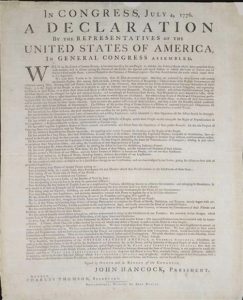
On a sweltering July day in 1776, fifty-six men gathered in Philadelphia’s State House to affix their names to one of history’s most audacious documents: the Declaration of Independence. Among them were five delegates from New Jersey—more than from any state except Pennsylvania and Virginia. These “Jersey Five”—Richard Stockton, John Witherspoon, Francis Hopkinson, John Hart, and Abraham Clark—were not career revolutionaries or firebrand orators like Patrick Henry. They were lawyers, farmers, educators, and a clergyman who had built comfortable lives under British rule. Yet they risked everything—life, fortune, and sacred honor—because they believed the colonies could no longer tolerate taxation without representation, arbitrary governance, and the erosion of their rights as Englishmen. Their participation helped transform a scattered rebellion into a unified nation, but it came at a profound personal cost. Their stories reveal both the idealism and the human price of American independence.
The road to July 4 began weeks earlier. In June 1776, New Jersey’s Provincial Congress, frustrated with its conservative delegates who still hoped for reconciliation with Britain, replaced them with five men explicitly authorized to vote for independence. The new delegation arrived in Philadelphia on June 28, just in time to join the debate. On July 2 they voted “yes” on Richard Henry Lee’s resolution for independence; on July 4 they endorsed the final document. Most signed on August 2. Their decision was not abstract philosophy—it was a calculated gamble against the world’s most powerful empire.
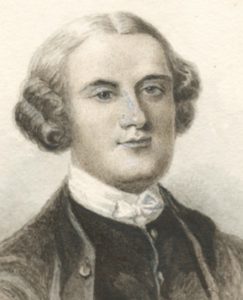
Richard Stockton (1730–1781) was the first New Jerseyan to sign. Born into wealth in Princeton, Stockton graduated from the College of New Jersey (later Princeton University), studied law, and became one of the colonies’ most eloquent attorneys. He served on the royal council and supreme court but grew disillusioned after a 1766 trip to Britain, where he witnessed parliamentary arrogance and lobbied unsuccessfully against taxes without representation. By 1776 he had resigned his crown appointments and entered Congress convinced, as he told colleagues, that reconciliation was impossible.
Stockton’s signature cost him dearly. In November 1776, British forces captured him shortly after he fled his Princeton home, “Morven,” to take refuge in Monmouth County. Dragged through freezing weather, he was imprisoned in New York’s Provost Jail, placed in irons, starved, and brutalized for nearly two months. Paroled in poor health, he returned to find Morven looted and occupied—furniture, library, livestock, and papers destroyed. Cancer claimed him in 1781 at age fifty; he never saw victory. Stockton’s ordeal became a stark reminder that the Declaration’s signers meant their pledge literally.
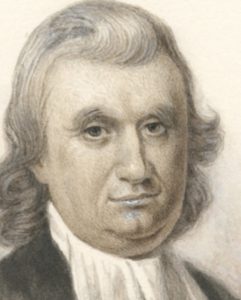
John Witherspoon (1723–1794) brought moral authority and intellectual fire. The only active clergyman and college president to sign, the Scottish-born Presbyterian minister arrived in Princeton in 1768 to lead the College of New Jersey. A brilliant orator and educator—he later taught James Madison and Aaron Burr—Witherspoon fused Calvinist theology with Enlightenment republicanism. In a 1776 sermon, he declared British policy turned colonists into “slaves,” and when a colleague hesitated over independence, Witherspoon shot back: “We are not only ripe for the measure but in danger of rotting for the want of it.”
Witherspoon remained in Congress until 1782, helping to draft key documents and to rebuild Princeton after the British occupation. He later chaired New Jersey’s ratification convention for the Constitution and organized the national Presbyterian Church. His life embodied the idea that liberty and virtue were inseparable—religious conviction propelled him into politics, yet he never abandoned the pulpit.
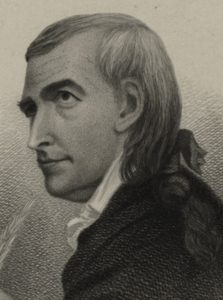
Francis Hopkinson (1737–1791) was the delegation’s Renaissance man. Born in Philadelphia but a New Jersey resident by 1774, Hopkinson was a lawyer, judge, musician, poet, and satirist. He composed the first American secular song, designed Continental currency, and wrote biting propaganda like the 1774 satire A Pretty Story, which mocked King George III. Appointed to the royal council, he resigned in protest and joined Congress in June 1776.
Hopkinson voted for independence and signed August 2. British troops looted his Bordentown home multiple times, yet he survived to serve on the Navy Board, design early American flags and our Great Seal, and become a federal judge under Washington. His cultural contributions—songs, essays, and symbols—helped forge a distinctly American identity, proving the Revolution was fought with pens and notes as much as muskets.
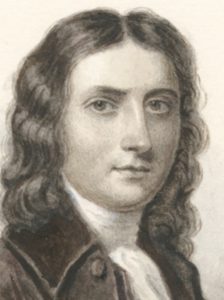
John Hart (c. 1713–1779), known as “Honest John,” represented the yeoman farmer. A prosperous landowner in Hopewell Township with thirteen children, Hart had served in the colonial assembly and opposed British policies through local committees. Elected to Congress in June 1776 at age sixty-three, he signed with “unusual zeal,” fully aware British forces were advancing.
The war devastated him. Hart’s wife died soon after; British and Hessian troops ravaged his farm, burned his mills, and forced him to hide in the woods for months while his children scattered. He returned to serve as speaker of the New Jersey Assembly but died in 1779, bankrupt and broken, never witnessing Yorktown. Hart’s story humanized the Revolution’s toll on ordinary families.
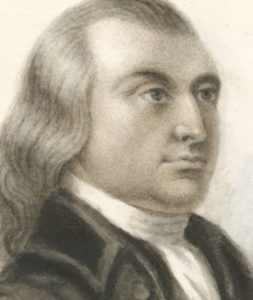
Abraham Clark (1726–1794) was the delegation’s populist voice. A self-taught lawyer and surveyor from Elizabethtown, Clark suffered physical limitations that kept him from heavy farm labor but not from public service. He had long criticized British overreach and was the only New Jersey delegate who initially favored independence. On July 4 he wrote a friend that “we must now be a free independent State, or a Conquered Country.”
Clark’s two soldier sons were captured and imprisoned on the notorious British prison ship Jersey. Offered their release if he recanted, Clark refused. Both survived, but the family endured years of hardship. Clark continued serving in Congress and the U.S. House until his death in 1794, always championing the rights of small farmers against wealthy elites. His steadfastness underscored that independence was not just for the gentry.
Collectively, the Jersey Five’s participation carried immense symbolic and practical weight. New Jersey’s delegation helped tip the balance in Congress; without their votes and signatures, the Declaration might have faltered. Their diverse backgrounds—elite lawyer, fiery divine, artistic polymath, humble farmer, and self-made surveyor—showed the Revolution crossed class and regional lines. They embodied the era’s core ideals: natural rights, consent of the governed, and resistance to tyranny. Yet their sacrifices exposed the Declaration’s human cost. Three died before the war ended; homes were looted, families scattered, health ruined. Stockton’s imprisonment, Hart’s flight, Clark’s sons on the prison ship—these were not anomalies but the rule for many signers.
Their legacy endures. Morven, Stockton’s estate, stands today as a museum. Witherspoon’s Princeton shaped future leaders. Hopkinson’s music and designs still echo in American culture. Hart’s grave and Clark’s modest homestead remind us that ordinary citizens built the republic. In an age when signing one’s name could mean death, these five Jersians proved that liberty demands courage. Their pledge was not empty rhetoric—it was a blood oath that helped birth a nation. Two hundred fifty years later, their example still challenges us to defend the freedoms they risked everything to secure.
You can learn more about these intriguing men at the Morven Museum and Gardens Exhibition, Five Independent Souls: The Signers from New Jersey, opening May 3rd.
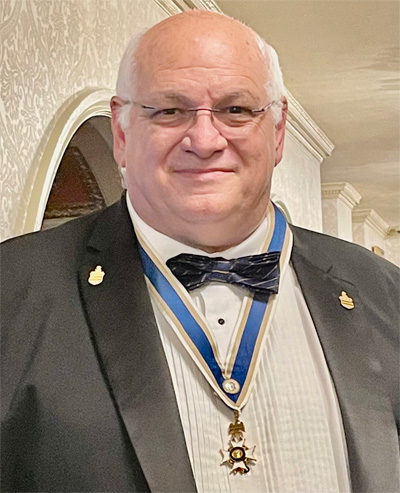
Roger S. Williams is the Vice Chair of the History and Education Committees for the National Society, Sons of the American Revolution. He is the State Historian of the New Jersey Society SAR and the President of its Princeton Chapter. He is the cofounder of TenCrucialDays.org, a 501 (c) (3) nonprofit organization dedicated to heritage tourism and the education of the sites and venues of the Trenton and Princeton campaigns. He is a member of the National Council on Public History, the National Trust for Historic Preservation, and the Congress of American Revolutionary War Round Tables. Roger is also a producer for The Crossing: A Revolutionary New Musical, TheCrossingMusical.com