There are a variety of physical infrastructures that help support suburban life. Sometimes this infrastructure needs to improve, change, expand, or transform. This could include anything from creating more housing, other redevelopment of public and private spaces, and transportation enhancements that help people get from one place to another. Making changes to keep up with changing times and community needs is essential to keeping the suburbs successful.
TRANSPORTATION
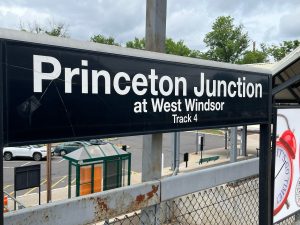 So far in 2026, NJ Transit (NJT) trains have experienced issues with overhead wire failures, electrical and train fires, and multiple instances of extreme weather situations. Princeton Junction Station, where many locals take the train into New York City and elsewhere, is the most populated weekday station on the Northeast Corridor line. Modernizing and fixing the infrastructure would improve the commute for approximately 4,600 customers who board there each workday and thousands more throughout the system. That includes NJ Transit President/CEO and Princeton resident Kris Kolluri.
“I’m not just CEO, but a daily rider of the train system and my wife also takes the train to New York. So, I’m not unaware of the challenges, or what is happening on the system,” Kolluri told Princeton Perspectives. “The recent issues we’ve seen, whether at Penn or on the corridor, or on non-corridor issues, were driven by extraordinary things. In winter we had 2 generational snowstorms. Then we had a really challenging portal cutover that ultimately led to a positive thing because we were able to replace half of a very old bridge with a brand-new bridge. But that led to disruptions for a while. Then in the last several weeks, we’ve had generational heat events.”
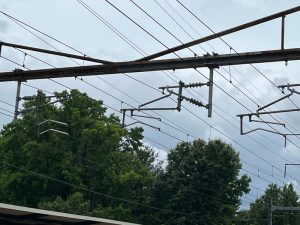 NJT trains run on lines owned by Amtrak, which operate using a catenary system. This is different than the way Long Island Rail Road and Metro-North operate, which are on a third rail system. The catenary was deemed to be more environmentally friendly, but utilizing overhead wires exposes the system to many more elements that can cause disruptions.
When major train issues occurred just before July 4th, Kolluri says it was the hottest it had been since 2011 (temperatures reached 108°). The materials expand in extreme weather, and that can lead to warped rails and impact the tension of the wires, leading to sagging wires. These require the system to be shut down to allow for repairs, causing delays or suspensions. Additionally, the original 1910 Portal Bridge that Northeast Corridor trains must pass over is a swinging bridge, which has historically malfunctioned due to weather and mechanical issues.
Weather is not the only cause for disruptions. NJT also had suspensions in recent months due to train fires as well as rerouting of customers via PATH trains for World Cup events. With the environmentally triggered and pre-planned events aside, riders say there are still many issues that need attention.
“I’ve been taking the train from Princeton Junction to NY Penn for over 23 years. 23 years of missing dinner with the family because of delays. 23 years of missing my kids’ summer events because of downed overhead wires. Missing my kids’ school plays because of ‘equipment availability resulting from mechanical issues,’ missing doctor appointments, sweating in Penn station waiting for trains to post, standing in the aisles because of limited cars, wondering what the outside looks like behind the dirty train windows. And heaven help you if you need to find a functioning bathroom,” one disgruntled Princeton Junction regular shared. “NJT has taken years off my life.”
In 2024, when riders were complaining about the numerous and repeated travel issues occurring on the NE Corridor Line, Amtrak vowed to make things better. And they tell Princeton Perspectives they have.
“Since 2024, Amtrak made improvements to our infrastructure, operations, and maintenance and inspections. None of those incidents from 2024 were replicated in 2025. Unfortunately, some of the infrastructure is still over 115-years-old. While we are working on even more improvements and investments, which including those either improve or replace more-than-a-century-old components, thousands of people traveling by train in NJ are still relying on them for their trip,” says Amtrak Senior Public Relations Manager Jason Abrams.
Hardware replacement on the catenary, chip protectors added to protect equipment from catenary impacts, increased inspections, signaling system upgrades and more were completed. This year, the first phase of the Portal North Bridge cutover was completed and made operational in March, with the second and final cutover planned for this fall. A completely new bridge which does not swing open and close will eliminate that risk of complications leading to delays and suspensions.
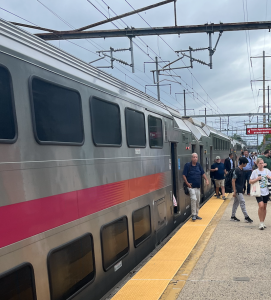 As Amtrak makes its improvements, and the two work together on building a new tunnel, NJT says it is doing what it can to modernize and fix what it is responsible for. 60% of its cars are still from the 1970s and 80s. They contribute to some of the problems. A $1.7 billion commitment from Governor Murphy enabled the purchase of 374 new rail cars, which should start to roll out later this year and be completely replaced by 2031. There are also efforts being made to improve communications with customers by offering accurate, real-time information both digitally (on the app, website, and social media) and in person through station and in-car announcements. NJT has put out a request for information to work towards having a modern modem on each locomotive that communicates with their information disseminating platform.
Despite or because of the needed improvements, in 2024 the NJT Board adopted a new fare policy. It began with a 15% increase in July 2024, the first increase in 10 years. That was followed by a 3% increase last year and another 3% increase on July 1. An automatic 3% increase is expected to take effect every July going forward unless the policy changes. While there may have been improvements, with more in the works, riders have told Princeton Perspectives they are frustrated to be forced to pay more each year while experiencing a too-often imperfect system.
“NJT has been around for 47 years. 35 out of that 47 we haven’t had a consistent funding policy,” Kolluri recalls. “I can’t talk about what happened; I can deal with a pragmatic problem presented to me that says we need to build a reliable system. The only way I know how to do it is by making sure we make investments.” Kolluri explained. “I’m determined to build a reliable system. It’s going to take time.”
And money. On July 16, the NJT Board is scheduled to vote on a proposed $3.5 billion budget, including over $1 billion in state support. That is 11% higher than last year’s budget. Will it be enough to stabilize the aging system?
COMMUNITY REDEVELOPMENT
While rail customers await a more reliable system, other forms of infrastructure are changing in the area. In Princeton and neighboring Lawrence Township, redevelopment projects are being considered that could have impacts for generations.
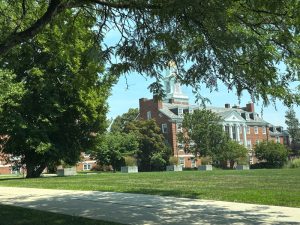 In Princeton, one of the biggest development considerations on the horizon is what will become of the Westminster Choir Campus, which was left mostly vacant when Westminster Choir College relocated to Rider’s Lawrenceville campus in 2020. While the community awaits full proposals, one possibility is making advances. Topology NJ was hired last year to do analysis, speak to the community and create a redevelopment plan for this property purchased by the municipality through eminent domain. Possible ideas have included that part of the campus could be used by Princeton Public Schools, perhaps other parts will be used to relocate municipal offices and more possibilities are being generated. In June the public learned greater details about how Princeton is working with McCarter Theatre to expand their programming and revitalize a part of the campus in keeping within Westminster Choir Campus’ origin mission.
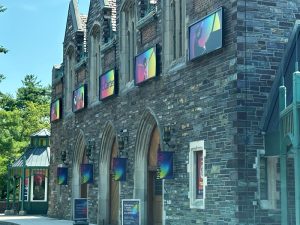 “McCarter has applied to a state funding program that would provide funds to help repair and update several of the historic buildings on the former Westminster campus; in particular, the former Chapel and Playhouse. These spaces have a long history as spaces for arts, education, and community, and we’d love to be part of the town’s planning process to help reactivate them for that purpose. We are awaiting the outcome of that grant application and hoping for a favorable decision,” explains Martin Miller, McCarter Theatre Center Executive Director.
Princeton Council approved renewing the professional services agreement with Topology NJ to create a redevelopment plan just for the portion of the campus to be used by McCarter. This would detail what is allowed, compliances and zoning to enable McCarter to move forward quickly if the grant is awarded. The decision is expected to come down sometime before late September, and if approved, McCarter would have just one year from the day approval is received to submit a fully approved site plan to the state. The vision could include visiting artist residences as well.
HOUSING REDEVELOPMENT
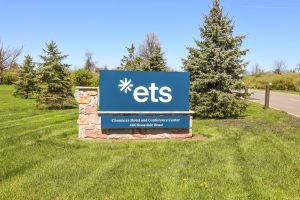 There is further redevelopment being discussed on another nearby campus. ETS currently occupies 376 acres of land in Lawrence Township (on the border of Princeton, and with a Princeton mailing address). Discussions are now underway that could see 75 acres of the north campus transformed.
“ETS has evolved in recent years and like many organizations, we have adapted to changes in how and where work gets done, which has influenced how we evaluate and utilize our physical footprint in Princeton. We are proud of our long-standing presence in the community and are committed to maintaining a meaningful presence on our campus,” a spokesperson for ETS explained to Princeton Perspectives. “ETS has been engaged in discussions with Lawrence Township in response to the Township’s need to address its affordable housing obligations. As part of that process, the Township has explored a potential rezoning scenario that could allow for residential development.”
Approximately 800 units of housing are being discussed, a mix of market-rate and affordable housing. There may also be some retail offerings and other services built on the site. At the May 18th Lawrence Planning Board meeting, comments made by residents led to several suggested revisions. They were not yet fully incorporated into a final zoning ordinance; therefore, a May 19th public hearing was postponed.
A rezoning ordinance must be approved in order for this plan to move forward. The hearing not yet been rescheduled, but many residents showed up to a June Master Planning meeting to express thoughts about the ETS campus. They ranged from concerns about traffic impacts that such a large development could have on Rosedale and Carter Roads to expressions of hope that more housing could provide needed affordable options for many.
“If the area were to be rezoned, a range of options could be considered for the future of the property. While no final decisions have been made, ETS has explored possibilities that align with both community and environmental needs and our organizational priorities,” the ETS spokesperson added.
Will Lawrence Township build an 800-unit housing development at ETS? Will a larger budget enable NJT to improve its rail system? Will McCarter Theatre be awarded the grant award and begin to transform Westminster Choir Campus? Housing, trains and community spaces support suburban life and the improvements, changes, expansions will be telling.
Lisa Jacknow spent years working in national and local news in and around New York City before moving to Princeton. Working as both a TV producer and news reporter, Lisa came to this area to focus on the local news of Mercer County at WZBN-TV. In recent years, she got immersed in the Princeton community by serving leadership roles at local schools in addition to volunteering for other local non-profits. In her free time, Lisa loves to spend time with her family, play tennis, sing and play the piano. A graduate of the S. I. Newhouse School of Public Communications at Syracuse University, Lisa was raised just north of Boston, Massachusetts but has lived in the tri-state area since college. She is excited to be Editor and head writer for Princeton Perspectives!