
 Artificial Intelligence (AI) is driving demand for data centers, sparking debate about electrical grids, location, noise pollution, water consumption and more.
A new report by Allianz Trade says 15-20% of global data center electricity is being used for AI. The report cites such workloads could increase to more than 40%, and without adoption of cleaner energy options, could cause $154 billion in annual climate-related damages by 2030.
AI IN NEW JERSEY
AI development is not slowing down, it is growing everywhere. In the Garden State, some local officials and residents have voiced concern the cart may have gone before the proverbial horse, as AI expansion has been strongly encouraged despite little input from the state yet on how to supply the electricity needed to make it all run.
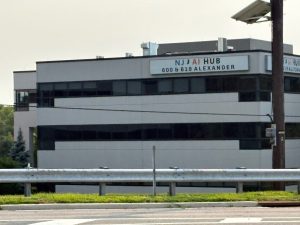 The NJ AI Hub, a partnership between the state and private sectors, education and development, celebrated its first anniversary in June. It sits on Alexander Road in West Windsor, not far from the Princeton border. Its purpose is to help promote research, collaboration and act as an accelerator for New Jersey AI business – which excites many due to potential high-paying jobs, expanding the tax base and positioning NJ as a leader in this industry. As the opportunities advance, demand for more data centers is expected to grow. Yet it was not until last week that the first meaningful legislation was signed to hold data centers accountable for their own energy usage.
The bill, signed into law on July 7, 2026 alongside two other utility measures, ensures “large data centers pay their fair share for energy instead of shifting costs onto New Jersey families and small business.” It does so by creating a new ratepayer class and rate structure for data centers, incentivizing the centers to bring cheap, clean power to the grid and cut back when strains arise. It also enables data centers to offset their demand by paying for use elsewhere on the system.
There are more than 15 other AI or data center-related bills sitting in the hands of the NJ Legislature. They overwhelmingly focus on four main goals: protecting electric ratepayers, preserving grid reliability, increasing transparency and reducing the environmental footprint of AI data centers. Until the state provides more input and guidance, the issue is being handled differently within each local government.
MUNICIPAL BANS
 On June 18, 2026, the Montgomery Township Committee unanimously voted to approve an ordinance prohibiting data centers within its geographical boundaries, citing doing so will help “ensure the orderly development of the Township and to protect existing residential, commercial, and environmental resources.” The code of the Township of Montgomery, within the Land Development Ordinance, was amended to accommodate this ban.
Other nearby municipalities have not yet gone that far. But, neither does it mean data centers are fully welcomed.
PJM Interconnection, the regional grid operator for New Jersey, has stated the supply costs that led to a spike in residential electrical bills this past year were in part due to increased demand and an inadequate supply of infrastructure to meet it (some of which can be attributed to data centers).
Because PJM systems and operations are reviewed by the state, legislative input is needed to make change. Such input is one of the hopes as East Windsor considers development.
MORATORIUMS ON DATA CENTERS
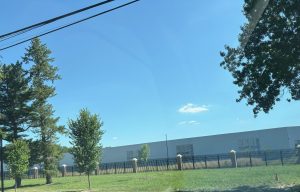 East Windsor has had a data center in operation for many years, with little fanfare. This facility was developed by McGraw-Hill, then acquired by QTS which has now operated it for approximately 12 years. Plans were submitted to build a second data center on the site, which were approved as well. But the proposed expansion, and a redevelopment ordinance that could have allowed for a data center at Probasco Road/Wykoff Mills Road, led to a lot of community input, concern and awareness.
In response to those discussions and other uncertainty, East Windsor last month approved an 18-month moratorium on the development of new data centers, effective through December 31, 2027.
“Data centers more recently have evolved into a growing focus of the global, national and state economy; however, there are a large number of public concerns and questions in our communities, many of which require statewide guidance and regulations to ensure the safeguard of our energy systems and pricing, and environmental resource preservation,” shares East Windsor Mayor Janice Mirinov.
The ordinance was approved with the explicit hope that by the end of 2027 the Governor and State departments will “undertake a full review and investigation of the data center industry, to identify and evaluate issues, impacts and benefits, and to strategically promulgate responsible regulations and requirements for data center development and protection of our communities.” It outlines four areas of consideration for the regulators and policy makers:
- Creation of market and regulatory mechanisms to ensure major energy users pay for all their energy-related costs, so that homeowners do not subsidize major energy user requirements and incur increased costs. (This may have been addressed through last week’s new law).
- Increased use of clean renewable energy sources by major power users.
- Transparent reporting of energy and water usage – so as to further energy efficiency and water conservation actions.
- Standards for facility design and construction, including ventilation and weatherproofing, for data centers to further mitigate energy use, water consumption, heat generation emissions, any potential noise impacts, and other identifiable factors.
Municipalities like this are in line with some federal thinking. On June 24, 2026, The Hill reported NJ Rep. Frank Pallone (NJ-6) as saying, “I am in favor of a national AI data center moratorium until we can find a way to ensure they don’t harm our nation’s air, water and power bills.” He went on to say, “Promises by the data center industry and Big Tech that these facilities will bring down costs have fallen flat,” and added “Instead, the grid operator for the mid-Atlantic region estimated that ratepayers — including families in New Jersey — paid over $9 billion last year for the electricity that data centers and Big Tech need to fuel their AI demands.”
DATA CENTER GROWTH
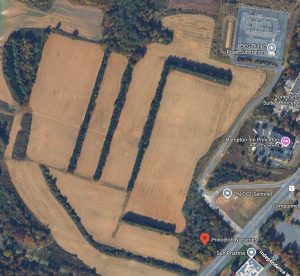
In the meantime, in South Brunswick, a data center proposal was approved by the South Brunswick Planning Board in 2025 at the old Princeton Nurseries site but residents have continued to raise concerns. One recently launched a petition against the 341,000 sq.-ft facility hoping the municipality will reject or suspend the approvals and outlining several steps to safeguard the community. Mayor Charles Carley appreciates concerns raised by residents and says many of those safeguards are in place, others he hopes will be further clarified by the state.
“Data centers aren’t new to South Brunswick. We’ve hosted operating facilities on Ridge Road for decades — they’ve been quiet neighbors. What’s changed is the scale and energy intensity of these newer facilities, which is why I welcome the Legislature setting clear statewide standards on water, energy, and noise. The state has done this before with freshwater wetlands, stormwater management, and other aspects of the built environment,” Carley explains.
Water usage is a concern with some data centers, as it can be part of the cooling system. Carley shares the NJ Department of Environmental Protection sets non-negotiable water service limits that will be monitored by municipal staff. He adds electrical capacity also has limits. The facility is coordinating with PSE&G, which will have to confirm they can reliably deliver the capacity requested on the permit.
“And noise is something residents are right to ask about,” Carley states. “The approval requires sound wall height standards and restricts diesel generator testing to daytime hours — our code enforcement staff monitors compliance. During the hearings, the developer, the residents, and the Planning Board each employed independent engineers who parsed over this matter.”
OTHER MUNICIPAL REACTIONS
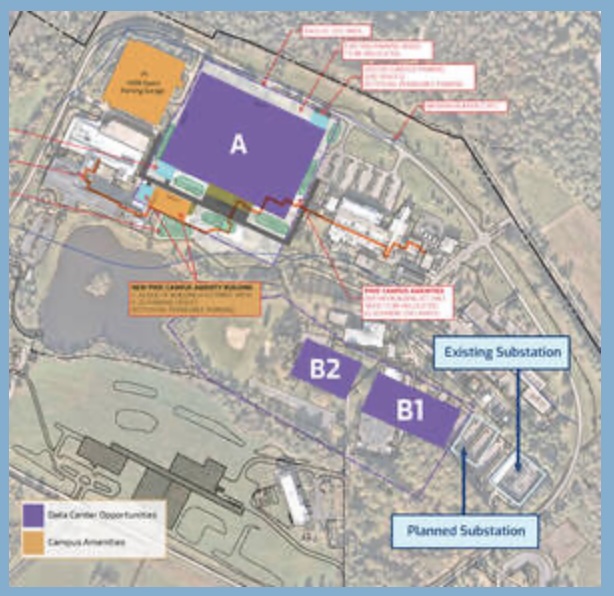
In other parts of the region, such as Hopewell Township, there is no zoning or permitting that allows for a standalone or primary-use commercial data center. But the township does allow for such a digital infrastructure if it is ancillary or directly supporting a primary permitted use on the land. So, Princeton West Innovation Campus has for years had a data center on site, as it was built decades ago to support pharmaceutical endeavors for Bristol-Myers Squibb.
“The site was originally developed with substantial supporting infrastructure, including onsite waste treatment and cooling systems, along with upgrades over time, including improvements to the PSEG substation at Mt. Rose. The Township Committee continues to be attentive to the evolving conversation around AI, data centers, and digital infrastructure,” explains Hopewell Township Mayor David Chait. “Any data center-type use would need to be clearly ancillary to a permitted primary use. Based on that framework, I am not aware of any approved proposal that would change this or allow a standalone data center at that site.”
The opportunities that await on former corporate campuses and other sites near existing high-voltage infrastructure do not present themselves in Princeton where Council President Michelle Pirone Lambros says AI data centers have not been discussed. Perhaps it is due to the limited and costly land, but requests have not yet come before Princeton Council. Neither have any come to West Windsor. There is a proposal detailed online that suggests the company Switch is considering a 150MW capacity data center campus there, but Mayor Marathe said he has never heard of it, has not been informed of any AI data center proposals and no permits have been filed. Switch did not return our requests for comment.
A new report by Data Center Watch (May 2026) reveals more than $64 billion worth of data center projects were blocked or delayed by local authorities over the past two years. As each municipality handles the possibilities in their own way, many local officials are looking forward to more state and federal guidance to help them balance potential opportunities with protections for their communities.

Lisa Jacknow spent years working in national and local news in and around New York City before moving to Princeton. Working as both a TV producer and news reporter, Lisa came to this area to focus on the local news of Mercer County at WZBN-TV. In recent years, she got immersed in the Princeton community by serving leadership roles at local schools in addition to volunteering for other local non-profits. In her free time, Lisa loves to spend time with her family, play tennis, sing and play the piano. A graduate of the S. I. Newhouse School of Public Communications at Syracuse University, Lisa was raised just north of Boston, Massachusetts but has lived in the tri-state area since college. She is excited to be Editor and head writer for Princeton Perspectives!