
 For generations, suburban communities were built around raising children. The foundation of nearly every neighborhood centered on schools, sports fields, playgrounds, shopping centers, parks, and commuter routes. Parents met while waiting for dance class, cheering from the sidelines at soccer games, or chatting at the bus stop before work. Friendships formed naturally because life happened in the same places every week. Communities were shaped by the needs of young families, and in many ways, those shared experiences became the social infrastructure that helped people build lifelong relationships.
Today, our suburbs are evolving once again, but this time the conversation extends far beyond children. As people live longer, many families are finding themselves navigating a completely different chapter of life. Adult children are balancing careers, raising children of their own, and trying to support aging parents who want to remain active, independent, and connected. The question is no longer simply whether a community has great schools or convenient shopping. It is also whether it offers the resources, opportunities, and sense of belonging that allow older adults to age with dignity while giving families the support they need along the way.
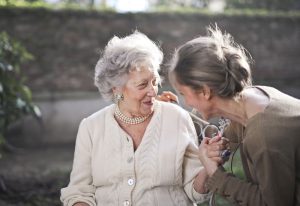 The reality is that aging is no longer a niche conversation. Nearly every family will experience it in one form or another. Some will help a parent recover after a hospitalization. Others may begin noticing memory changes in a loved one or find themselves researching home care, rehabilitation, assisted living, or physical therapy for the very first time. It often happens gradually until one day it feels like everything has changed. Suddenly conversations revolve around medication schedules instead of school schedules, medical appointments instead of soccer practice, and safety concerns instead of summer vacations. There is no handbook handed to adult children explaining how to navigate this stage of life, and for many, it can feel overwhelming.
Many people now find themselves part of what has become known as the Sandwich Generation. They are caring for children while also helping aging parents, often feeling like they are being pulled in every direction at once. One minute they are helping with homework, and the next they are comparing rehabilitation centers, researching transportation services, or trying to understand whether their parent is still safe living alone. It is a balancing act that requires patience, flexibility, and more emotional energy than most people expect. If there is one thing almost every caregiver eventually realizes, it is that they cannot do it alone.
 One of the most encouraging shifts taking place in our communities is that caregivers are beginning to find one another. Adult children are discovering that support does not always come from having every answer. Sometimes it comes from speaking to someone at a Care2Caregivers Virtual Support Group who simply understands. Sometimes it comes from attending an educational seminar at the Princeton Public Library, joining a community organization group, participating in an online discussion at the Center for Modern Aging Princeton, or having an honest conversation with a professional who has helped hundreds of families navigate similar situations. There is tremendous comfort in hearing someone say, “We have been through this too.” That shared understanding reminds families they are not the only ones asking difficult questions or making impossible decisions.
At the same time, older adults are looking for something just as meaningful. They want connection. Retirement may change a daily routine, but it does not change the desire to laugh with friends, continue learning, volunteer, or feel like an active part of the community. Many suburban towns have begun recognizing this by expanding opportunities through senior centers, educational programs, walking groups like the Princeton Area Walkers, fitness classes, volunteer organizations, art workshops like those at the Arts Council of Princeton, and community events, like one of our favorite ones, Princeton Porchfest, which brings the university and the community together on a very special day to connect. These spaces provide far more than entertainment. They create friendships, routines, and a renewed sense of purpose. Sometimes the biggest benefit is simply knowing someone notices when you walk through the door each week.
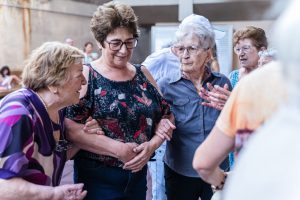 The importance of these social connections cannot be overstated. Research continues to show that loneliness and social isolation affect both physical and emotional health. Older adults who remain socially engaged often experience better overall well-being, while prolonged isolation has been associated with depression, cognitive decline, cardiovascular disease, and other chronic health concerns. While healthcare providers play an essential role in caring for older adults, healthy aging is about much more than medical appointments. It is about maintaining relationships, staying involved, and continuing to feel connected to the world around you. Having somewhere to belong can be just as valuable as receiving medical care.
As communities continue to evolve, education has also become part of our infrastructure. Most families do not begin searching for senior care resources until they are facing an unexpected crisis. A fall, a hospitalization, or a new diagnosis often forces families to make important decisions with very little time and even less information. Imagine how different those decisions might feel if families already knew what resources existed before they needed them. Educational events, community organizations, physicians, therapists, nonprofit groups, and online resources all play an important role in helping families prepare rather than react. Information creates confidence, and confidence allows people to make thoughtful decisions during what can be an emotional time.
Digital resources have also become an important extension of community. Families often begin searching for answers from the comfort of their own homes, especially when they are juggling work, children, and caregiving responsibilities. Platforms such as Senior Care Circuit were created with that in mind, offering families one place to explore providers, learn about different types of senior care services, request care without having to do all of the research, and access educational content without spending hours searching multiple websites. While no single resource has every answer, making reliable information easier to find helps families feel more prepared and less alone.
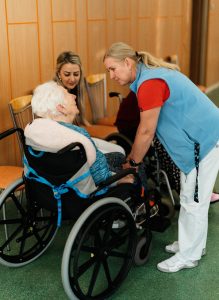 Successful aging at home also depends on something much larger than one individual or one organization. Aging in place often requires an entire network working together. Family members, neighbors, physicians, therapists, home care professionals, transportation services, meal delivery programs, volunteers, and community organizations each contribute an important piece of the puzzle. No one person carries the responsibility alone, and no single organization can meet every need. The strength of the community comes from collaboration, communication, and the willingness to support one another through every stage of life.
Perhaps this is what evolving infrastructure really means. It is not only about new buildings, wider roads, or additional shopping centers. It is about creating communities where people feel connected from childhood through older adulthood. It is about recognizing that every stage of life deserves opportunities to build friendships, remain engaged, and access meaningful support. The strongest suburbs of tomorrow will not simply be measured by how well they attract young families. They will also be measured by how well they care for the generations who helped build those communities in the first place.
After all, every one of us begins life surrounded by people who help us grow. As time passes, the roles slowly change. Parents become grandparents, children become caregivers, and communities have the opportunity to grow alongside them. Perhaps the future of suburban life is not about choosing between supporting children or supporting older adults. Perhaps it is about creating places where every generation feels seen, valued, connected, and reminded that no one has to navigate life’s journey alone.

Dharmi S. is the Founder of Senior Care Circuit, a digital platform launched in May 2026, created to make exploring senior care easier for families while increasing visibility for providers serving older adults. A lifelong New Jersey resident and an entrepreneur for more than two decades, Dharmi has spent over 10 years working with the senior population in a variety of professional roles, giving her firsthand insight into the challenges families face when searching for care.
After recognizing a gap in how families research and connect with senior care providers, she made it her mission to create a more modern, accessible approach. As an adult child herself, Dharmi understood that the days of relying solely on brochures and scattered information were coming to an end. She envisioned a digital platform where families could explore options, access educational resources, and connect with providers in one place, before a crisis ever occurs.