
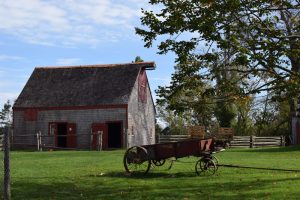
 During the spring of 1776, Princeton area farmers focused their time and energy on preparing their fields for crops and a variety of essential seasonal farm chores. By the end of June, the expanding military events protesting certain acts of Parliament were developing into a new campaign that would bring the opposing armies to Princeton at the end of the year. The primary military actions had so far occurred far from Princeton in Canada and around Boston. Having ingloriously evacuated Boston in March, British General William Howe and his brother Admiral Richard were now maneuvering to take possession of New York as headquarters for the largest military expeditionary force ever sent out by Great Brittain. Princeton area men mostly stayed home and served in their local, part-time, militia company as required by the New Jersey Provincial Congress, although some joined Continental Army regiments fighting in Canada. The Provincial Congress had run parallel to and then replaced the British Royal colonial government that had ceased operation. Royal Governor William Franklin was arrested in January. Because the militia was organized by counties, Princeton men were awkwardly divided between the 3rd Middlesex County and 2nd Somerset County regiments since Nassau Street was the county line separating them.
As the British arrival at New York approached, some New Jersey militiamen, including some from Princeton, obeyed orders to report to New York for short periods of time to help prepare defenses to impede the anticipated British troops. Earlier in the year, on January 10, Thomas Paine published his extremely popular pamphlet Common Sense encouraging thoughts on the idea of independence. Debates among the people of Princeton regarding resistance to acts of Parliament now included arguments pro and con independence.
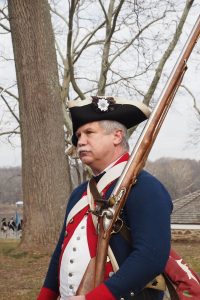 On June 11, the Provincial Congress authorized raising 3,300 militiamen volunteers who would supply themselves with arms, accoutrements, and camp kettles to serve full-time with Washington’s Continental Army for five months, until December 1, to resist the British taking New York and threatening New Jersey. So many men were needed for this five-month service that Washington ordered militia troops called out from Pennsylvania and Maryland to defend New Jersey as part of his Flying Camp. This did not work well and beginning in July it became necessary to call out the regular New Jersey militiamen more frequently than usual. One half of each regiment and company turned out for a month, and the other half turned out the following month to replace them. This alternate month rotation continued for the remainder of the year. Two regiments would combine, with the two colonels alternating command each month and their officers and men serving every other month. For the common soldier, this meant sometimes serving under officers he did not know and not always with the same officers. This system completely upset the traditional county organization the men understood and put an enormous strain on them and their families. Maintaining the New Jersey civilian economy and providing sufficient food for everyone became virtually impossible.
Princeton’s John Witherspoon and Richard Stockton voted for independence on July 2 in Philadelphia. After the Continental Congress delegates finally accepted wording for a Declaration of Independence on July 4 copies of it were printed for distribution. Several days later, on the evening of July 9, a crowd consisting of merchants, craftsmen, college students, and local farmers, along with wives, children, and enslaved people, assembled in front of the “grandly illuminated” Nassau Hall and heard “INDEPENDANCY proclaimed under a triple volley of musketry, and universal acclamation for the prosperity of the UNITED STATES. The ceremony was conducted with the greatest decorum.”
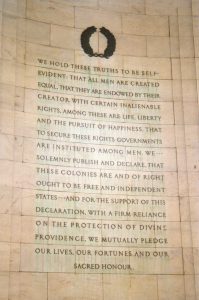 That same day, Princeton men with the five-month militiamen serving in New York heard the Declaration strongly read to them by a high-ranking officer about 6:00pm. One wonders what went through the minds of Princetonians hearing the Declaration and realizing that their lives would never be the same again. They were no longer supporting a cause seeking to militarily defend and reestablish their rights as British citizens. Now they were fighting for thirteen newly declared independent states, separated from the country and rulers under which they had lived their entire lives. While things had been moving in this direction for some time, it was now official. Everyone also knew the Declaration would only stand up if its supporters ultimately defeated the highly touted professional army currently massing in the New York area. The population of Princeton contained both people supporting to varying degrees the independence movement and others wishing to remain British subjects. There were also many people, generally Quakers, who would not swear loyalty to either government and simply wanted to live their lives peacefully. Naturally and sadly, the many enslaved black people of Princeton wondered how their owners could seek independence while denying freedom to them.
The joyous July celebration engaged in by those approving the goal of independence contrasted sharply with everyone’s rapidly growing fear in response to the enormous British expeditionary force landing on and occupying Staten Island, threatening New Jersey as well as New York. Over the following months, American troops frequently passed through Princeton on their way to join with Washington to defend New York. It would be December before a significant British military force pushed into Princeton to settle in for the winter.
Now that New Jersey had declared itself an independent state and simultaneously adopted a state constitution created by the Provincial Convention, an ordinance was passed on July 15 establishing regulations for the election of the first New Jersey State government. This legislation created safeguards, including loyalty oaths, to limit officeholders to men who had supported the Patriot version of the colonial government and now the Declaration of Independence and the new State Constitution. In the exuberance of independence, the state constitution accidentally made many black men and white women eligible to vote. While this omission made New Jersey an exceptionally advanced state, in line with the “all men created equal” statement in the Declaration, the “error” would be “corrected” in 1807 and voting restricted to qualifying white males. The July 15 ordinance also directed that the new General Assembly and Legislative Council initially convene at Princeton on August 27. This was a tribute to the town’s population, its important location, and its influence on the growing movement. After all, Princeton was not one of the two state capitals, Perth Amboy and Burlington, left over from the period before 1702 when New Jersey was two colonies, East Jersey and West Jersey.
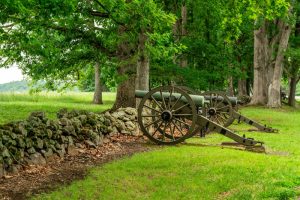 The story of Princeton in July 1776 is just a portion of its important, complex, and constantly changing story throughout the Revolution. The passage of the Declaration of Independence and its defense brought much military activity to New Jersey for about seven years, and the soldiers of both armies needed food and shelter, along with quantities of firewood for cooking and warmth. Princeton’s farmers suffered extensive pillaging by both armies even while multiple residents became employed by the Continental Army to purchase and deliver military supplies for it. Throughout the war that would only end in 1783, while the Continental Congress temporarily resided and worked in Princeton, Princetonians’ lives intimately revolved around the war and its always changing conditions.
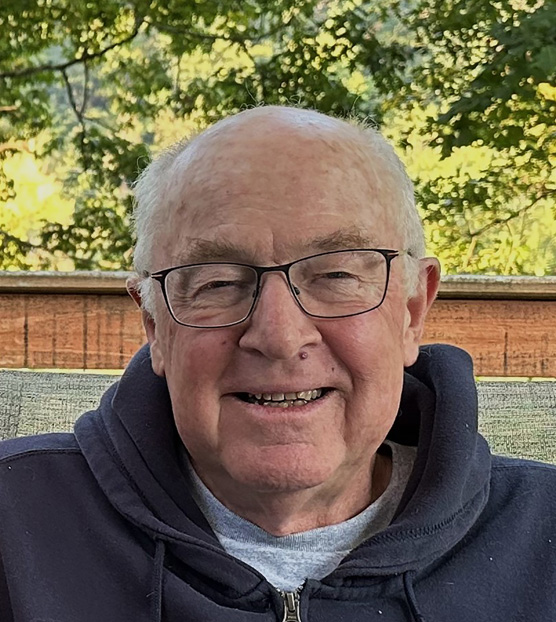
Larry Kidder is a retired history teacher who taught for 32 years at The Hun School of Princeton. He has also done research and writing for several local history sites, including Howell Living History Farm and the Princeton Battlefield Society. He is the author of about nine books dealing with historic topics and gives frequent talks about them.