 The week of July 4th, firework displays in Lawrenceville, Hamilton, and Mercer County Park entertained us locally. Chances are as you drove to your destination, you passed obelisks and monuments on the sides of the road that you’ve passed a thousand times, but never really took time to discover what historic events they commemorate. And as the fireworks burst in celebration of the independence of our United States, you were likely more focused on who you were with and who brought the desserts than on what took place in history to allow you to gather together at all.
The marking of Independence Day is of major significance, for in July 1776 our forefathers declared the original 13 colonies independent from British sovereignty. But that alone did not lead us to freedom, as the crown did not accept this decree. Fighting continued and six months later, about to give up at the end of 1776, George Washington and his troops instead fought on.
“After numerous defeats at the hands of the British throughout New York, turning into a dire retreat through New Jersey and across the Delaware River into Pennsylvania, the Continental Army was on the verge of collapse due to illness, desertion, poor morale, and ending enlistments,” shares Michael Russell, Princeton Battlefield Society President. “The confidence and leadership of George Washington, in the face of every possible man-made and natural obstacle, rallied his men to not only go on the offensive and take Trenton from the Hessians and then stand toe-to-toe with the British at Assunpink Creek, but also gave them the fortitude and willingness to reenlist and continue fighting for the burgeoning freedom of the new thirteen states.”
According to a 1777 diary found from militiaman Ephraim Anderson the troops marched from Mill Hill to the brook to take the Quaker road to get from Trenton to Princeton. This path took them to what became known as the Battle of Princeton on January 3, 1777. A battle that, in conjunction with the two Trenton battles just before it, turned the revolution in our favor.
“Strategically, winning in Princeton secured New Jersey in the hands of the Americans and denied the British the ability to ever regain a foothold in the state throughout the war. The British had to change their entire approach to the war after the Americans left Princeton for the higher ground of Morristown and the Watchung Mountains,” notes Russell.
Though not as prominent as the victories at Saratoga and Williamsburg, the Battle of Princeton remains an historically pivotal moment that kept us battling for freedom. To connect us to our past and remind us to embrace our future, those obelisks, monuments and other signage you may have blindly driven by have been strategically placed all around our town and county to ensure we know of the risks and efforts that were taken in these battles nearly 250 years ago.
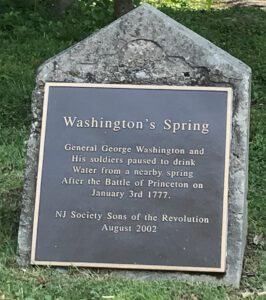 “Many towns and locations find an immense amount of pride in detailing the historic events which occurred in their town, county, etc. These can range from events of some historic importance (i.e., skirmishes, meetings, etc.) to the mundane (Washington’s spring outside of the battlefield – Washington’s troops stopped to drink here). These markers commemorate historic moments no matter how small,” explains Will Krakower, Resource Interpretive Specialist for The New Jersey Department of Environmental Protection, Division of Parks and Forestry. “The ground we walk every day, every walk in the park, every stroll down Nassau, every drive to work, rests on ground which our ancestors walked, and in some cases fought and died, for their right to live a good life – a free life.”
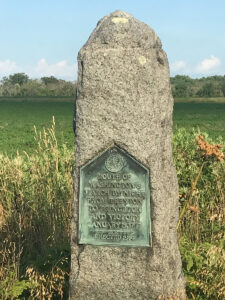 To mark this freedom and the 18-mile route the troops took to the Princeton Battlefield from Trenton, obelisks were placed in 1914 by the Sons of the Revolution. They used a collection of diaries, including that of Anderson’s, to map out the approximate route.
If you’re up for a fun scavenger hunt of sorts, you could set out this summer to march in the steps of the soldiers and find all twelve obelisks marking the Trenton-Princeton route:
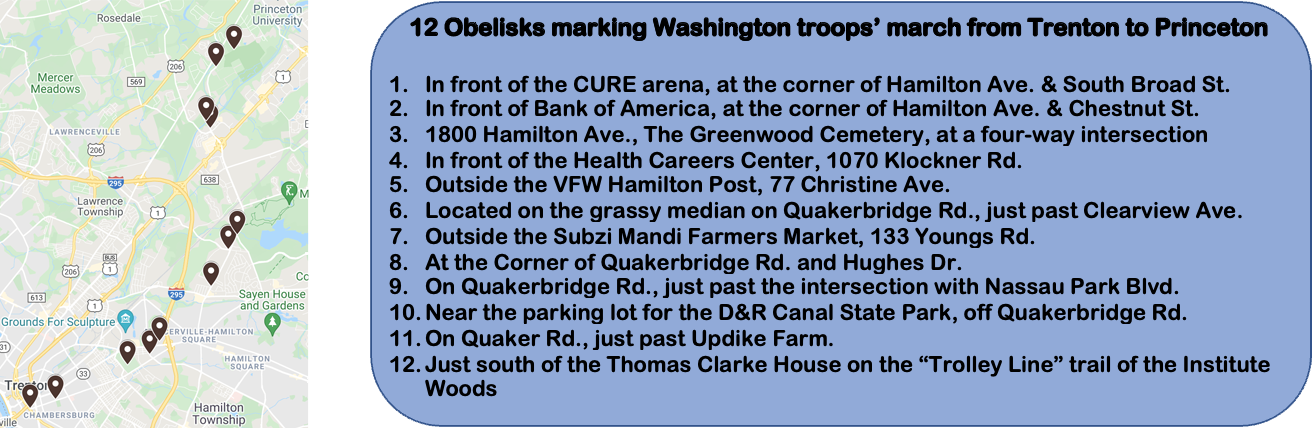
“Keeping in mind there weren’t really roads back in 1777 along that route as we know what roads are today. Essentially, they were cutting through a lot of farmland,” details Roger Williams, historian for the NJ Society of the Sons of the American Revolution and co-founder of tencrucialdays.org. “They’re placed in weird places, in the middle of things. If you draw a straight line from the ones that are on Hamilton Avenue down through to the ones in front of Steinert High School and through the VFW post and all the way to the one on Quakerbridge Road, that gives you what we think the route was.”
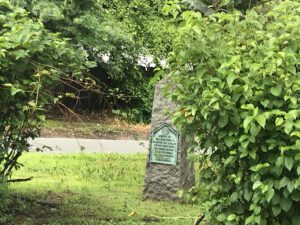 In fact, Williams contends the obelisk at Quakerbridge Road and Nassau Park Boulevard was placed on the median rather than in the middle of what was then an adjacent farm field, where the troops actually marched, to ensure people would see it.
“The troops marched through what is now Home Depot, through Home Goods and through Dicks Sporting Goods,” he explains. Williams is in discussions to move the obelisk to correctly stand in the path of the march, in front of Dicks Sporting Goods.
Back in 1777, as the soldiers made their way beyond what is now the Institute Woods, they found themselves on a farm we today call the Princeton Battlefield, which became host to the infamous Battle of Princeton. Though so much surrounding the area is different today, there are three structures in Princeton that stand to connect us to that battle.
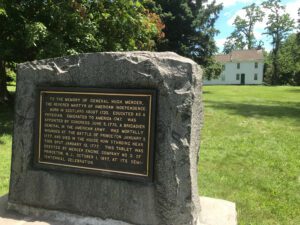 “The Thomas Clarke House and Mercer Oak are symbolically used to represent the Battle of Princeton,” Russell explains. “The Thomas Clarke House is the only remaining structure to eyewitness the battle and characterizes the peaceful Quaker farmland that was shattered by conflict and violence on January 3, 1777. The Mercer Oak embodies the life and sacrifice of General Hugh Mercer who was critically wounded and fell on the field, dying nine days later in the Thomas Clarke House.”
After fighting on this battlefield, the troops made their way north and continued fighting in front of Nassau Hall. If you look closely, you can see marks on the building today, scars from the battle. (If you can find where Nassau Hall was struck, send your pictures to our Editor!).
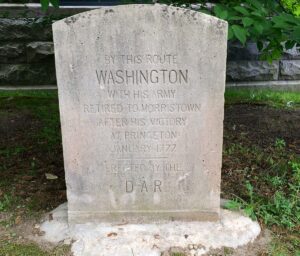 The Princeton area is also home to many other markers and monuments to the Revolutionary War, including as the site of the first of 13 markers to the battle march that Russell previously mentioned from Princeton to higher ground in Morristown. In front of Aaron Burr Hall at Nassau Street and Washington Road you can find the first, from which the troops continued north into Kingston, marked at the Kingston Presbyterian Church Cemetery at Main and Church Streets. Nearby, there is a third marker in Griggstown at Canal Road near Copper Mine Road. And as the march continued through Somerville, Bedminster, Bernardsville, Basking Ridge, Harding Township and onto Morris Township, the other markers make note.
The decision not to march to New Brunswick but instead to march to Morristown was actually made in Kingston, as the troops were moving north from Princeton. Historians think of this moment as the end of the Battle of Princeton, and it is commemorated with a marker there.
“On the northern bank of the Millstone River, Washington and his commanders had a council-of-war on horseback,” shares Williams. “These guys were getting out of town as fast as they could before the British could catch up with them, and they made the decision there.”
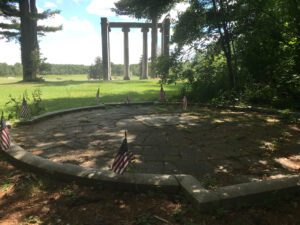 Mercer County is actually ranked as 11th of the top 15 counties in America with the most historic markers. If you want to find out where they all are, you can look online at sites like Revolutionary War New Jersey or The Historical Marker Database. If you are nearby the Princeton Battlefield, you can cross Mercer Street and make your way towards the historic columns at the back of the field. Walk just past them and to the right, you will see on the ground another marker, this one a memorial to 36 soldiers that died at the Battle of Princeton.
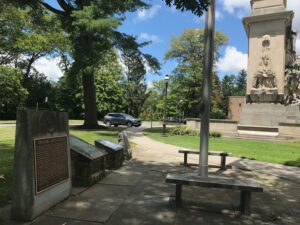 If you leave that area and continue towards what is today the former Princeton Boro municipal building, it’s hard to miss the large Princeton Battle Monument depicting Washington leading his troops that was put there in 1922. Several yards away are also several smaller markers commemorating the revolution, and people like Colonel John Haslet, a commander from Delaware that was killed at the Battle of Princeton.
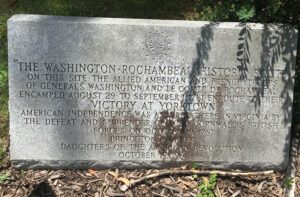 The Revolutionary War lasted until 1783, and Princeton would continue to be a thoroughfare for passage, as a major hospital area and with many supplies manufactured nearby in Trenton. In fact, Washington’s travels back south in 1781 are commemorated with a marker placed by the Daughters of the American Revolution in 1981 as part of the Washington-Rochambeau Trail.
“In 1781, when the French and Americans marched to Yorktown, they converged at Princeton,” recollects Williams. “The French marched south on Rt. 206 from Somerville and the Americans marched south on Rt. 27 and they actually met in late August at Princeton. They encamped on what is today grounds of Trinity Church and Morven. You had 7,000 troops who just camped there for 2 nights before they headed further south.”
Two years later, Washington would return one final time to Kingston, to a home that is now located at Rockingham State Historic Site. In August 1783, he was called back to Princeton and leased this home nearby for 2 ½ months. It was there he wrote his farewell orders, officially retiring from military service at the end of October, just before the Treaty of Paris was signed and ended the Revolutionary War.
In 2026, the 250th Semiquincentennial will be celebrated honoring the 250th anniversary of the signing of the Declaration of Independence. It’s planning comes at a time when much is being questioned about civil rights and the founding of our country. But the history of grit and resilience teaches us where we came from, and the buildings and markers help to ensure that we know what took place, to interpret how we wish.
“Through the lens of the 18th century citizen and soldier, the conditions of life and warfare were very different from what we deal with today. The obelisks and monuments help us consider the commitments and beliefs of our ancestors, all from a present-day perspective,” explains Russell.
If you are interested in learning more about the history and the markers in our area, you can learn more about car and bus tours here or to get a tour at Princeton Battlefield click here.
Lisa Jacknow spent years working in national and local news in and around New York City before moving to Princeton. Working as both a TV producer and news reporter, Lisa came to this area to focus on the local news of Mercer County at WZBN-TV. In recent years, she got immersed in the Princeton community by serving leadership roles at local schools in addition to volunteering for other local non-profits. In her free time, Lisa loves to spend time with her family, play tennis, sing and play the piano. A graduate of the S. I. Newhouse School of Public Communications at Syracuse University, Lisa was raised just north of Boston, Massachusetts but has lived in the tri-state area since college. She is excited to be Editor and head writer for Princeton Perspectives!
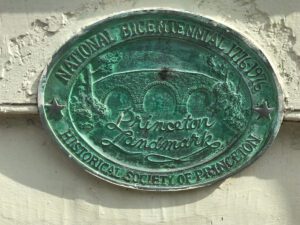 In Princeton, we are lucky to be able to stand in front of the home where
 “COVID really provided us the push we needed to dive in,” shares Izzy Kasdin, Executive Director of HSP, whose organization this year compiled its virtual history-related information and activities into what it called ‘
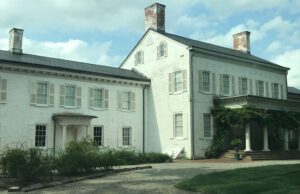 “As we look forward to the 250th anniversary of the signing of the Declaration of Independence in 2026, we know the eyes of the country will be looking for rich and interesting content and as a home of a signer, the only one open to the public in New Jersey, we will be ready to serve,” explains Jill Barry, Morven Museum & Garden Executive Director.
 “Historians have a special expertise, a special knowledge about our past and there are a lot of mistruths being spun about that both on the popular media and in social media, and we have a duty to step in and correct things,” said
 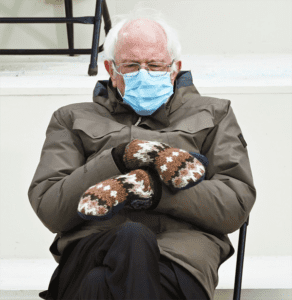 A perfect example of this is Bernie Sanders in his mittens at the Biden inauguration in January. It became a viral meme and will forever be remembered as part of that event. Is there a detail like that you can recall from any past inauguration, and would it have become such a moment had it not been recorded and shared on social media?
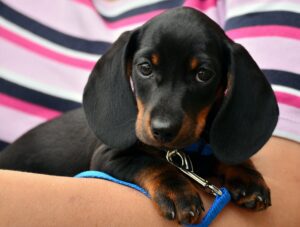 One year ago, I wrote in my Editor’s Note about the great outdoors and how stepping outside can help us get clarity of our current situation. Last June, deep in the midst of the COVID-19 crisis, we were at a very different place than we are today. Yet, I think the same advice holds true – if we can step outside (ourselves, rather than just outdoors) and take a look back at our pandemic year, through the hardships came some rays of light.
 At a time when we were forced to stay home more, forced to spend more time with our nuclear families and forced to figure out how we could make ourselves happy without a lot of outside influence, the past 15 months of the pandemic helped many come to the realization that it was primetime to bring home a pet. The unconditional love and companionship of pets brought happiness and positivity into an otherwise difficult year. And pets, too, benefitted from loving homes and opportunities they might have waited much longer for.
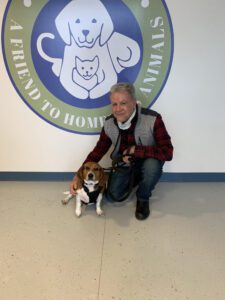 “In mid-March [2020], as soon as the Governor of New Jersey put the stay-at-home order in place, which was supposed to be two weeks, we started to see this uptick. When it was extended past the two weeks, it completely was doubling, tripling, quadrupling our applications,” recalls Heather Achenbach, Executive Director of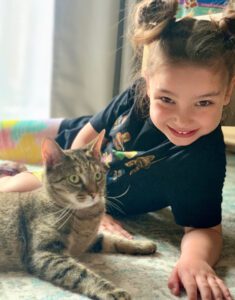
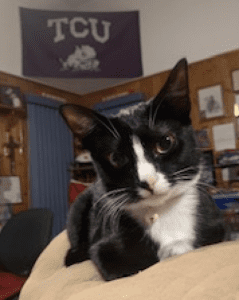 Loki, a tuxedo kitten named for their favorite Marvel character, was adopted from SAVE and became an instant part of the family. And it’s been easy, as currently there is always someone at home to provide care and attention. This timing also created an unintended consequence as Loki became largely unaccustomed to strangers.
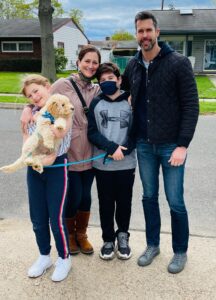 “We were fortunate that someone on the waitlist backed out and we got their slot, we only waited 8 weeks. We would have had to wait at least 6 months otherwise,” states Dana Levine, who lives in Princeton with her husband and two children.
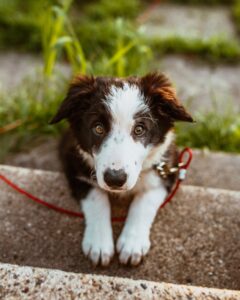 And stress isn’t just something that humans can feel. As our world opens back up and people begin to spend less time at home, it is important to adjust your pets to their new reality and keep them from feeling overwhelmed.
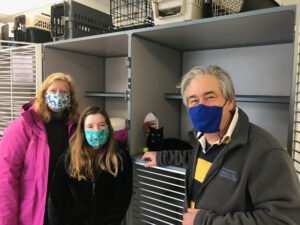 If you haven’t yet brought home your pandemic pet, it’s important to consider the reasons you want one– are they fleeting or permanent? Our experts have some advice to guide you towards the right pet.
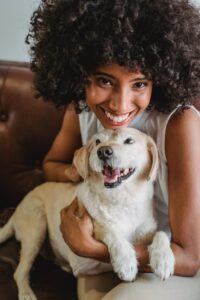 The stores where you may get supplies and food, they are short staffed, too. And busy as ever – only more people are coming on site rather than requesting deliveries.
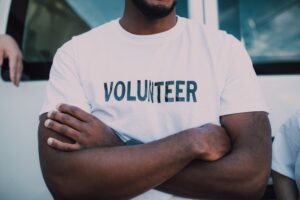 Volunteers are always an essential part of our society, providing their time, money or abilities to help others. When COVID-19 hit our area in March 2020 and life essentially shut down, existing needs became even more apparent and new ones emerged. The virus was scary and brought with it countless unknowns. Many retreated to the safety of their homes, while some put aside their own fears and came forward in unprecedented ways.
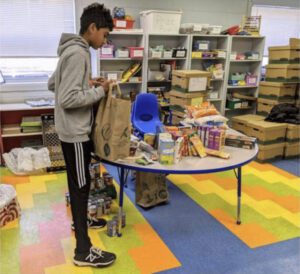 “What we would do is pack grocery bags full of food every Wednesday and then take them, in our cars, to people in and around Princeton who needed help the most,” explains Sheth. “As the summer went on, more and more people started helping out and the whole process was just accelerated and became more efficient. While I only helped out on certain days, there was also so much work happening behind the scenes that I got to see happen through my mom.”
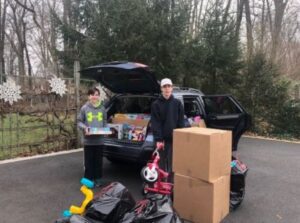 Ryan was turning 11 when he asked for gently used toys for his birthday rather than new gifts. Noticing a shortage of good toys and activities for indoor recess at his school,
 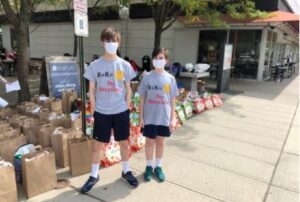 “We are working with a new organization and our goal is to recycle 200+ items a month for kids who would really like new things to play with,” shares Ryan. “Plus, it helps to keep stuff out of the landfill.”
 Since 2012,
 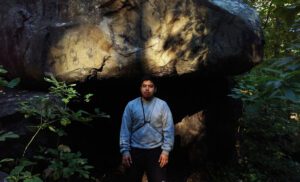 “Whether Samuel is helping with a neighborhood cleanup, giving a presentation about the health impacts of climate change, or helping sign up Princeton residents for an emergency notification program, he does it with quiet humility and genuine care about his community,” shares Christine Symington, Sustainable Princeton Program Director.
 Also working with our local Hispanic community as a bilingual speaker of English and Spanish, Guillermo Herrera Nimmagadda was finishing his first semester as a graduate student at Princeton University this past December when he jumped right into a volunteer role with
 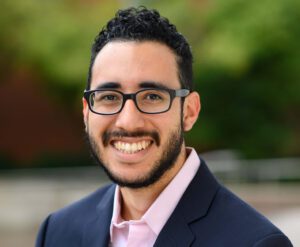 “I knew the pandemic had led to a severe housing crisis. Because I was frequently in contact with Spanish-speaking residents, it also meant I could serve my Latinx community, which had been disproportionately hurting from COVID-19,” says Herrera Nimmagadda.
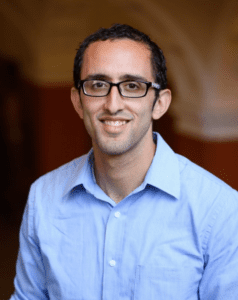 Simon began volunteering with HIP in December as well, and along with Herrera Nimmagadda helps the organization sort through applications to grant assistance. At 34-years old, Simon is slightly older than some of our other Rock Star Volunteers, but his joint efforts with Herrera Nimmagadda warrant a mention. Simon is not a native Spanish speaker but learned the language through courses at his public schools and in his years at the University of Michigan. After teaching amongst immigrant communities for several years, Simon decided to go back for a degree as an immigration lawyer (he has one more year of school to go) and now advocates for opportunities.
 Simon also gives his time to
 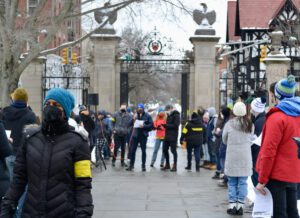 In conjunction with other local organizations, 29-year old Nymisha sought out to form an action group which protested with 200 community members and submitted a petition of nearly 900 signatures to encourage
  Like Nymisha, Shuk Ying Chan felt her status as a Princeton University graduate student was providing her a safety net that others in the greater Princeton community were not privy to.
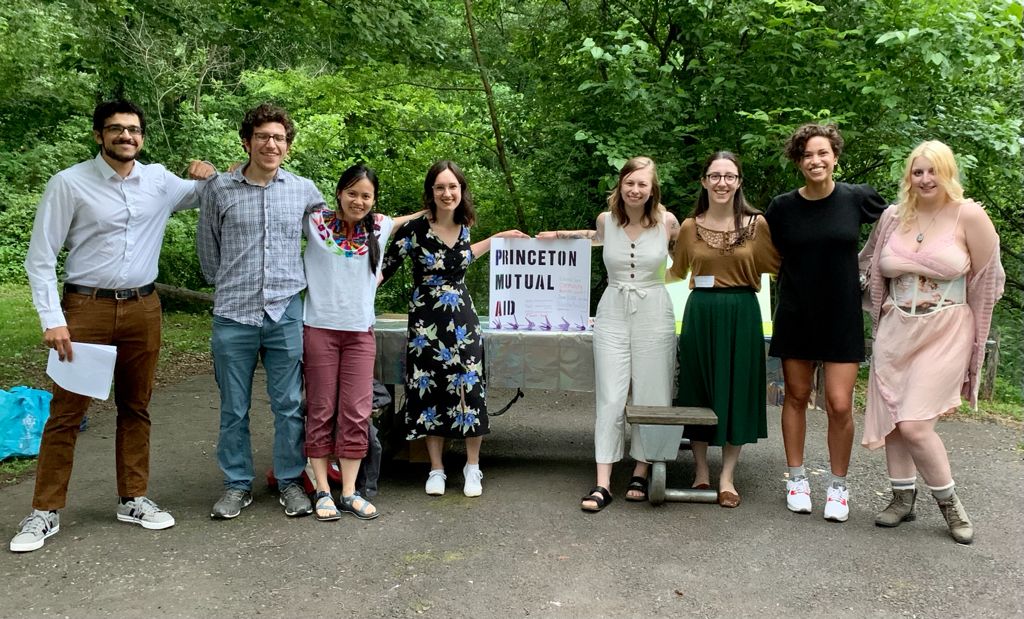 “Through my work with PMA, I came into contact with contract workers at PU who had been furloughed without pay, and who had basically been abandoned by the university as soon as their labor was no longer needed, at a time of unprecedented crisis. We were outraged by this, and as a student at the university I felt an extra moral obligation to stand in solidarity with the workers whose labor makes the university and its activities possible,” Chan recalls. She then worked with a team of people to pressure the University to change its ways. “We mobilized students and PMA members to speak out at university townhalls, organized a petition of solidarity, helped the student newspaper with their investigative report on the issue, worked with union organizers.”
 Helping others by empowering them to help themselves,
  “When you get to see the same people each and every week, you get to really know them, and a simple food drop off can often turn into a 15-minute conversation,” says Erman.
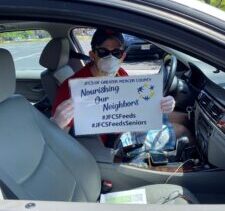 Lucian first learned to volunteer by raising and training puppies with his family at the age of ten. He also gained insight about giving back to the community in high school through a teen philanthropy program he took part in called
  To be out in the world during the pandemic, one needed a mask…and that is what led
 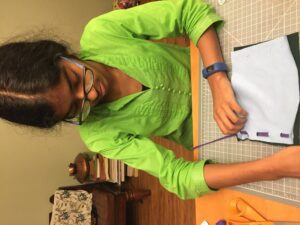 “The Arts Council’s Sew Many Masks project gave our troop a chance to use the sewing skills we learned in Girl Scouts during middle school and helped many people in our community,” recalls 16-year old Bhavana Thelakkat. “We sewed masks, made t-shirts masks and t-shirt yarn at home. I also enjoyed creating videos for Sew Many Masks to help others learn how to contribute as well. Overall, this project was a great experience as it helped to make a positive impact on so many people!”
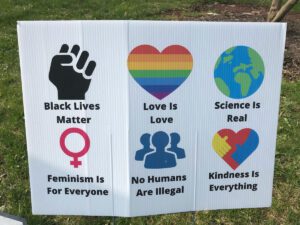
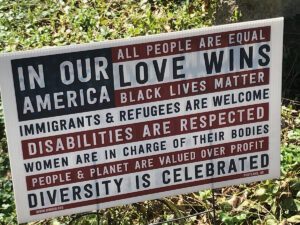 Love wins. Kindness is everything. Diversity is celebrated. Signs like these, posted all around, began sprouting when society decided to no longer tolerate bias, racism and bigotry.
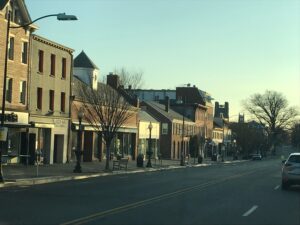 A so-called liberal town, located halfway between New York City and Philadelphia, Princeton prides itself as being open-minded, made up of academics and professionals, passersby and lifers, of all nationalities and colors. Princeton, originally named Prince-town in the late 17th century, was the capital of our country for 4 brief months in 1783. But, as we’ve learned through the history of our forefathers and other national leaders, political standing doesn’t always mean political correctness. When it comes to being welcoming to others, do Princetonians do better or worse than their fellow Americans with regards to their biases and judgements? It turns out, it’s a little of both.
 47% of all bias incidents reported in Mercer County last year were against Blacks, the largest percentage of bias incidents overall, against a group that makes up only 21% of the county population. In Princeton, Blacks comprise 5.5% of the population.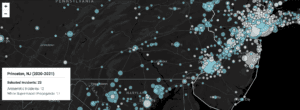
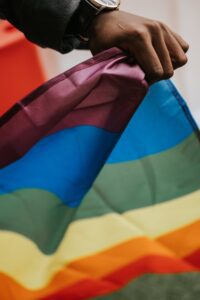 The number of anti-gay, lesbian, bisexual or transgender bias incidents increased in Mercer County from 2019-2020. While no one person can speak for all, there appears to be a sense of acceptance for gender differences in town.
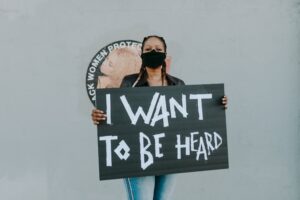 Working towards the betterment of our democracy is the Princeton Civil Rights Commission, helping to educate the community about implicit bias through outreach, community dialogues, community forums, seminars, focus groups and study circles.
 Amongst the organizations seeking to do better, is the Princeton Police Department, which is focused on proper training of its Police force.
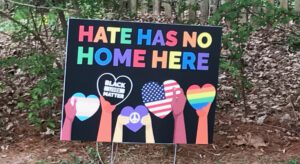 One can look at the numbers and say we are lucky, only 9 bias incidents have been reported so far this year in Princeton. Or, one can look and say even one incident is too many. Across town, lawn signs are posted stating “Hate has no home here.” Whether this is more hope or can become fact, time will tell.
 In May 2020, George Floyd was arrested and killed in police custody. Princetonians quickly joined in protest, along with communities nationwide and renewed calls for racial justice were born. Shortly after, Princeton Perspectives took a look at our local response in our issue “
 One of the first changes to occur last summer was the removal of the name of Princeton’s John Witherspoon Middle School. The Princeton Board of Education (BOE) gave it the temporary name last August of Princeton Unified Middle School (PUMS) and announced at the recent April 27th meeting that the new, permanent name will be in the same vein – one that is not specific to a person. At the upcoming May 25th meeting, PUMS Principal Jason Burr is expected to recommend a permanent name, possibly Walnut Lane Middle School, Princeton Community Middle School, Princeton Public Middle School, Princeton Middle School, or Princeton Unified Middle School. The community will be able to share its thoughts during open comment, and the BOE will then vote on a permanent name on June 15th.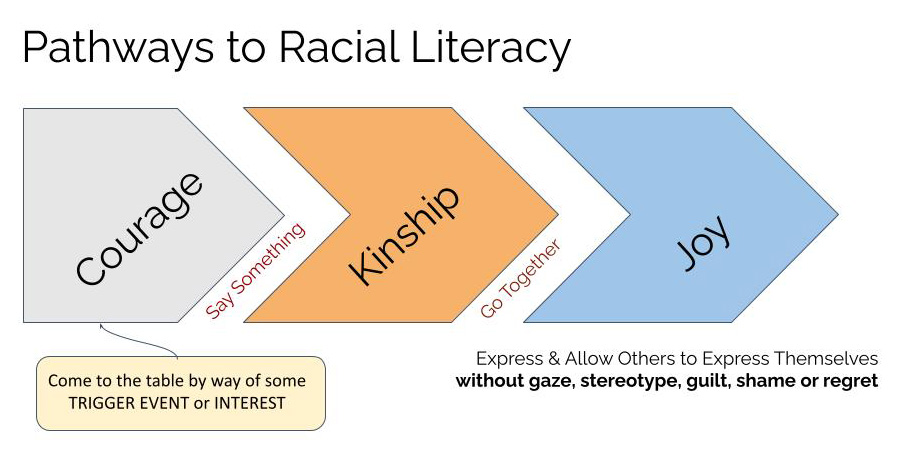
 To help move the needle further, Princeton Parents for Black Children (PPBC) was formed in January, organized by local parents to advocate for the rights of Black students within PPS.
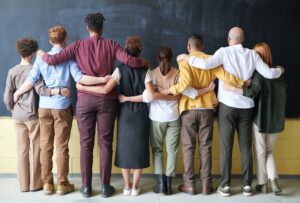 “They’re hard conversations to have because the person has to unpack their own baggage and be brave enough to maybe say something that might not be politically correct in today’s consciousness,” explains Tommy Parker, Chair of Princeton’s Civil Rights Commission. “One of the things that has to change is Princeton has to admit to its own real identity too. When folks think of Princeton, they think of the big institution across Nassau Street, this very rich town, and that’s its public face. But you also have a history where you literally had slaves. You didn’t start hearing about that until recently. In order for us to heal in the right way, all this information has to be brought forth and dealt with.”